
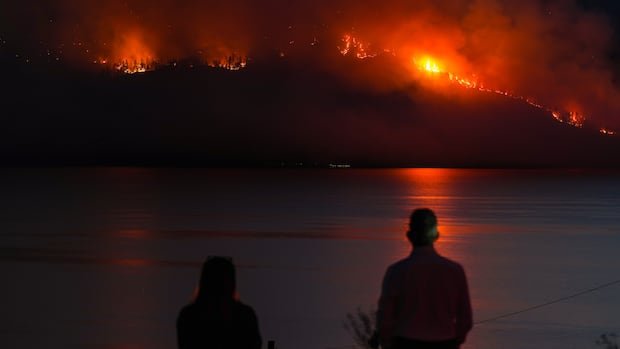

A powerful El Niño event, known as either a “super” El Niño or a “Godzilla” El Niño, is currently underway in the Pacific Ocean, causing disruptions in global weather patterns. This occurrence comes at a time when many regions worldwide are already experiencing extreme heat. North America and Europe recently recorded their hottest July on record, leading to multiple heatwaves, numerous heat-related fatalities, dried-up rivers, and widespread wildfires. Canada, for instance, has witnessed over 4.1 million hectares of forestland engulfed in flames, resulting in thick smoke covering vast areas in the eastern part of the country and parts of the northern U.S.
Despite this scorching summer coinciding with the onset of El Niño, climate experts clarify that El Niño is not directly responsible for these extreme weather events. However, they suggest that the convergence of El Niño with human-induced climate change could intensify these extreme weather conditions. Scientists emphasize that the impacts of El Niño are expected to be significant and far-reaching across a vast expanse.
El Niños occur naturally every three to seven years, typically commencing in spring and lasting well into the following year. The phenomenon arises when sea surface temperatures in the Pacific region along the equator rise at least 0.5 degrees Celsius above the norm, leading to atmospheric rearrangements. This alteration in weather patterns causes regions that are typically dry to experience heavier rainfall, while wetter areas may face drying conditions.
The ongoing El Niño, potentially one of the strongest on record, is projected to rival the intensities witnessed in 2015-16 and 1997-98, which were the most robust El Niños since records began in 1950. Climate models indicate that Canada and the northern U.S. may encounter a warmer winter than usual due to the influence of this El Niño, with British Columbia’s southern coast potentially experiencing reduced precipitation and snowpack levels. Conversely, the southern U.S. is anticipated to have a wetter winter.
The impact of El Niño is already noticeable in various tropical regions, with Peru and Ecuador facing heavy rains, floods, and droughts. Indonesia is currently grappling with an extended and more active wildfire season. In North America, the hurricane season is being affected by El Niño, resulting in fewer tropical storms and hurricanes in the Atlantic Ocean.
The unprecedented warming world due to human-induced climate change compounds the effects of El Niño. Climate experts suggest that the ramifications of this El Niño event will persist well into 2027. The combination of El Niño and climate change may lead to unexpected outcomes, challenging existing climate models. As a result, individuals can expect to witness a slew of climate-related events in the coming months, with both El Niño and climate change playing pivotal roles in shaping global weather patterns.