
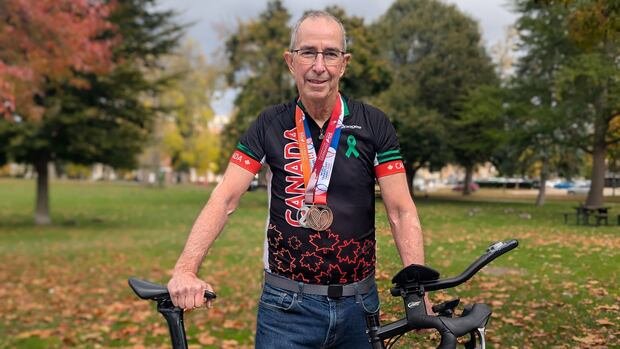

Cycling has not only been a recreational activity for Greg Wilkinson but also a vital part of his recovery journey following a liver and kidney transplant. After undergoing these surgeries, Wilkinson has actively participated in various competitions at the World Transplant Games and currently holds the title of the fastest double-transplant cyclist in his 70s globally. In a recent conversation with Matt Allen on Afternoon Drive, Wilkinson shared how cycling has significantly impacted his life.
Wilkinson’s cycling journey began when he was diagnosed with polycystic kidney and liver disease in his 20s, a genetic condition that progressively affects the liver and kidneys. After living with the disease for about 35 years, he eventually required a transplant. In 2005, while preparing for his own transplant, Wilkinson attended the World Transplant Games in London, where he witnessed transplant recipients participating in various sports, including cycling. This experience inspired him and gave him hope for the future.
When asked about his cycling pursuits, Wilkinson explained that the World Transplant Games serve three main purposes: encouraging physical activity post-transplant, providing motivation for individuals awaiting transplants, and increasing organ donor registrations. He primarily competes in cycling events such as time trials, where riders start individually against the clock, and road races covering a 30-kilometer course.
Acknowledged as the fastest double-transplant septuagenarian cyclist globally, Wilkinson humbly shared his achievements in the 70 to 80 age group. Reflecting on his journey post-treatment, he expressed immense gratitude for regaining his strength and mobility. Recalling a challenging ride in Italy and Austria in 2023, he emphasized the emotional significance of conquering difficult terrains, highlighting the newfound appreciation for life and the importance of organ donation.
Wilkinson’s story serves as a testament to the transformative power of resilience and determination in overcoming health challenges. His dedication to cycling not only symbolizes personal triumph but also embodies the spirit of hope and gratitude towards organ donors and their families.