
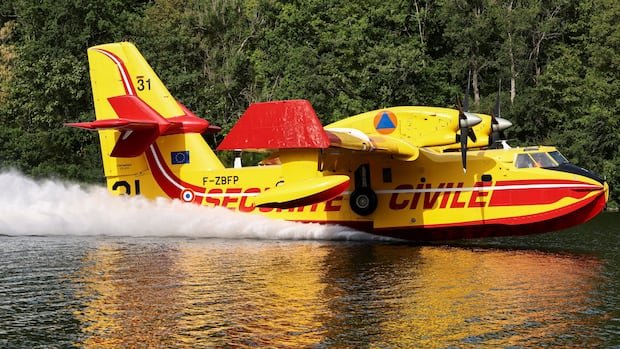

As wildfires continue to ravage Canada, the United States, and Europe, calls are intensifying for the manufacturer of the Canadair “Super Scooper” water bombers to ramp up production. De Havilland, based in Calgary, has decided to restart production of the Canadair after acquiring the program, previously managed by Bombardier until 2015.
The renowned Canadair aircraft are meticulously crafted by hand in Calgary, with components sourced from various locations across Canada. The revival of the production line, announced in 2022, is progressing well, with the first two aircraft set to be completed and delivered by early 2028.
Amid existing shortages and aging fleets, Canadian premiers and European leaders are eager to acquire these aircraft. The Canadair planes, originally developed in the 1960s, are specifically designed for combating large fires in the Canadian wilderness. Their unique capabilities allow them to maneuver through narrow canyons at low altitudes and swiftly gather thousands of liters of water from lakes, rivers, and oceans.
Recent criticisms from opposition politicians in France and Spain have highlighted the lack of operational Canadairs, hampering wildfire response efforts. Leaders like Manitoba’s Wab Kinew have expressed concerns over the shortage of new water bombers, emphasizing the urgent need to bolster firefighting resources.
De Havilland is under significant pressure to meet the soaring demand for Canadair water bombers. The company is contemplating the possibility of establishing a second production line to accommodate the high demand. Alberta Premier Danielle Smith is actively collaborating with provincial counterparts and the federal government to facilitate a substantial order from Ottawa, which would provide the necessary certainty for De Havilland to expand production capabilities.
Currently, De Havilland anticipates producing around 10 water bombers annually at full capacity, with the potential to double output to 20 per year with an additional production line. Despite having existing orders for 38 water bombers, new orders are scheduled for delivery between 2032 and 2033 due to the intricate manufacturing process involving tens of thousands of parts, a majority of which are sourced from Canada.
Aviation expert John Gradek emphasizes the critical need for multiple production lines to meet the escalating demand for Canadair water bombers globally. He warns of the potential threat posed by foreign competitors developing rival firefighting aircraft, underscoring the importance of sustaining Canadian manufacturing jobs and expertise in this sector.
Efforts to bolster domestic manufacturing and enhance the national fleet of firefighting aircraft have gained traction, with calls for a national fleet of modern firefighting aircraft echoing recommendations from a recent Senate report. The federal government’s commitment to supporting wildfire response efforts and strengthening national capacity is evident through initiatives such as leasing additional aircraft to assist provincial wildfire crews during peak fire seasons.
In addressing the pressing challenges posed by wildfires, it is essential to recognize that while aerial firefighting units play a vital role in wildfire mitigation, they are just one aspect of a comprehensive strategy. Ground crews, prevention measures, and mitigation strategies are equally crucial in effectively combating wildfires and safeguarding communities from the increasing threats posed by extreme weather events.