
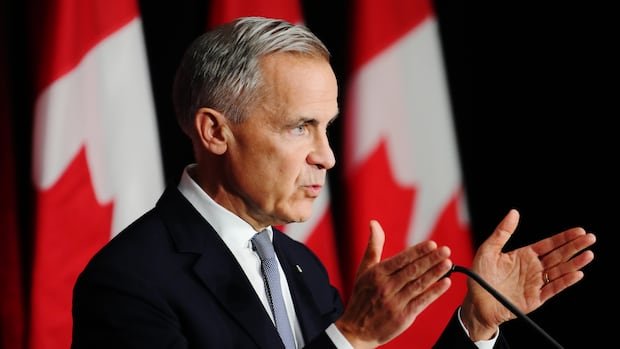

Prime Minister Mark Carney addressed Canadians, emphasizing the need for readiness for forthcoming challenges and sacrifices as his government gears up for the upcoming federal budget. Carney highlighted the imperative of fortifying the economy in the face of a more competitive and dynamic global landscape.
During a speech to university students in Ottawa, Carney stressed the necessity of taking action promptly to prevent escalating pressures. He acknowledged that transforming the economy would not be an easy or quick task, requiring sacrifices and time.
Carney discussed the evolving trade relations with the United States and unveiled plans to double non-U.S. exports in the next decade through the forthcoming budget. The budget will encompass a climate competitiveness strategy, a new immigration framework, and an international talent attraction initiative.
Preceding an overseas trip to participate in multinational summits in Southeast Asia, Carney engaged in discussions with opposition leaders, including Conservative Leader Pierre Poilievre. Poilievre expressed concerns about what he perceived as broken promises in Carney’s speech and the need for an affordable budget with specific demands on tax cuts and deficit control.
As the budget vote approaches, tensions rise with Liberal House leader Steve MacKinnon expressing worries about garnering enough support from opposition parties to pass the budget. Opposition parties like the Bloc Québécois have outlined key priorities for the budget, including health transfers, infrastructure investments, and housing initiatives.
In response to the looming budget vote, Bloc Québécois Leader Yves-François Blanchet emphasized the party’s unwavering demands, calling for respectful consideration of their requests. NDP interim Leader Don Davies emphasized the need for substantial investments in jobs, healthcare, and housing, urging the government to secure support for the budget.
The political landscape remains tense as parties position themselves ahead of the crucial budget vote, with the possibility of an election looming if the budget fails to pass. It is imperative for the government to navigate these challenges and secure the necessary support for the budget to avoid potential political upheaval.