
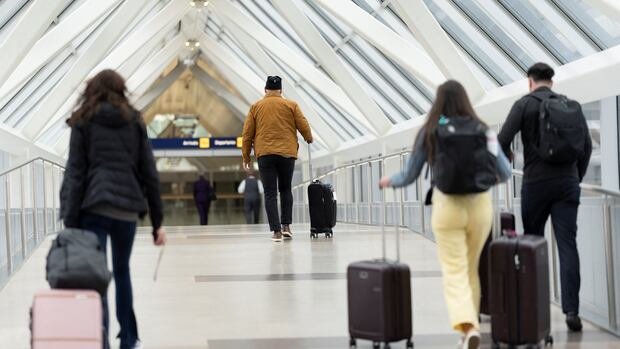

U.S. Transportation Secretary Sean Duffy issued a warning on Friday that airlines might have to reduce up to 20 percent of flights if the government shutdown persisted. As a result of orders from the Federal Aviation Administration (FAA), airlines slashed four percent of their domestic flights at 40 major airports to alleviate pressure on air traffic controllers, with a further 10 percent reduction scheduled for November 14. Duffy mentioned the potential for imposing even larger cuts up to 20 percent in the future.
The prolonged shutdown, lasting 38 days, has forced 13,000 air traffic controllers and 50,000 security screeners to work without pay, causing a rise in absenteeism. FAA administrator Bryan Bedford highlighted that between 20 to 40 percent of controllers were absent on any given day this week.
The Trump administration aims to pressure Democrats in Congress to agree to a Republican proposal for funding the federal government to end the shutdown. Democrats blame Republicans for the impasse, citing their refusal to negotiate on extending health insurance subsidies as the cause of the shutdown disruptions.
The current flight reductions affect approximately 700 flights operated by the four largest carriers – American Airlines, Delta Air Lines, Southwest Airlines, and United Airlines – with plans to escalate to six percent by Tuesday, excluding international flights.
Air traffic controller shortages on Friday led to flight delays at 10 airports, including Atlanta, San Francisco, Houston, Phoenix, Washington, and Newark, resulting in over 3,500 delayed flights by 3:30 p.m. ET. American Airlines CEO Robert Isom anticipated minimal disruption initially but cautioned against further extensive cuts.
United Airlines managed to rebook half of the affected customers within four hours of their original departure time. The ongoing reductions aim to ensure safety amid challenges posed by fatigued and absent air traffic controllers.
The FAA has also limited space launches and expressed the possibility of rejecting specific cuts if they disproportionately affect certain communities, along with the potential to reduce up to 10 percent of general aviation flights at busy airports in case of staffing concerns.