
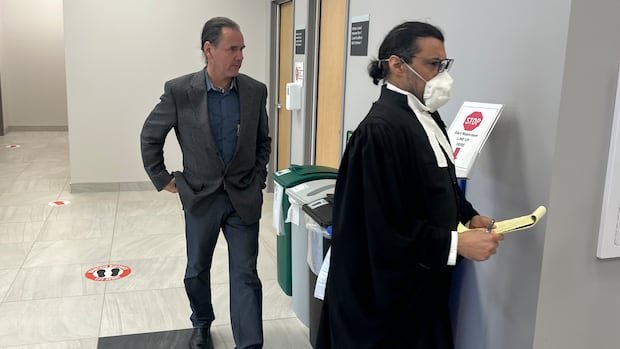

A man from Nova Scotia, aged 52, who faced drug charges related to conducting spiritual rituals at his rural residence using a hallucinogenic Amazonian concoction, has been granted a conditional discharge by Justice Josh Arnold of the Nova Scotia Supreme Court. The individual, Michael Adzich, will not have a criminal record if he adheres to a three-year probation order. Adzich’s counsel contended that a criminal record could impede his desire to partake in ayahuasca ceremonies in Peru.
The judge emphasized that the probation conditions and various factors in the case supported the decision for a conditional discharge without undermining public confidence in law enforcement. Adzich’s sentencing drew cheers from his supporters outside the Dartmouth courtroom. Adzich was charged after an RCMP operation during an ayahuasca ceremony at his yurt near Annapolis Royal, Nova Scotia, in November 2022. His advocates argue that such ceremonies can have positive impacts on well-being and trauma management.
Initially, Adzich challenged the charges citing infringement of his religious freedom rights but later pleaded guilty to importing and possessing DMT for trafficking, a banned substance in Canada crucial for ayahuasca. The prosecution raised concerns about the dangers and side effects of ayahuasca, particularly for individuals with heart conditions, while the defense maintained that Adzich ensured participant screening and conducted ceremonies safely.
As part of his probation, Adzich must perform 200 hours of community service, abide by the law, refrain from possessing or using DMT and two other substances in Canada. Adzich’s lawyer stressed the significance of the conditional discharge for his client’s travel plans, particularly to attend ayahuasca ceremonies in Peru. While religious groups in Canada can seek exemptions for ayahuasca use, Adzich did not pursue such authorization, as noted by Justice Arnold.
Character references from Adzich’s friends and supporters portrayed him as genuine, compassionate, and spiritually inclined, according to the judge. During sentencing, the prosecution attempted to challenge Adzich’s integrity, highlighting his tactics in importing ayahuasca, which the judge described as deceitful. Text messages exchanged by Adzich, indicating attempts to acquire untested ayahuasca and awareness of police seizures, were scrutinized during the court proceedings.
Justice Arnold criticized the defense for failing to properly address the disclosure issue related to the text messages. Adzich’s lawyer acknowledged the judge’s remarks, indicating acceptance of the court’s stance. The decision underscores the complexities surrounding the legal status and use of ayahuasca in Canada, with ongoing debates on its religious freedoms and potential risks.
[End of the rewritten article]