
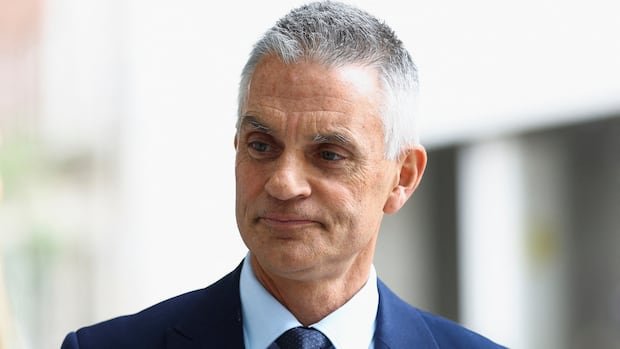

The chief of the BBC and the top news leader of the British broadcaster stepped down on Sunday following backlash over the editing of a speech by U.S. President Donald Trump. Director-general Tim Davie and head of news Deborah Turness both tendered their resignations, addressing concerns raised about the organization’s handling of Trump’s speech on January 6, 2021, ahead of the Capitol riot.
Critics accused the BBC of presenting a distorted version of Trump’s speech in a documentary by omitting the part where he called for peaceful demonstrations. In a letter to staff, Davie stated that his decision to resign after five years was voluntary, and plans were underway for a smooth transition to a successor in the coming months.
Turness justified her resignation by stating that the controversy surrounding the Trump documentary had tarnished the BBC’s reputation, emphasizing her responsibility as the CEO of BBC News and Current Affairs. Defending the organization’s journalists against bias allegations, she affirmed their commitment to impartiality and denied any institutional bias, acknowledging occasional mistakes.
Trump reacted to the situation by sharing a news article on his Truth Social network, condemning the “dishonest” journalists for manipulating the speech. White House press secretary Karoline Leavitt also weighed in on the matter, highlighting the clash between Trump and the BBC as depicted in media reports.
The pressure on BBC’s leadership escalated with the emergence of a report by Michael Prescott, criticizing not only the Trump speech edit but also the BBC’s coverage of transgender issues and alleged anti-Israel bias in its Arabic service. As a publicly funded national institution, the BBC faces heightened scrutiny and criticism from competitors due to its unique financing model through an annual television license fee.
While the BBC delivers a wide range of entertainment and sports content, its news division is frequently under scrutiny for impartiality as mandated by its charter. The organization often finds itself in the middle of political debates, with accusations of leaning towards different ideological spectrums. The recent controversies, including the Gaza documentary incident, have further fueled calls for reform within the BBC to address perceived biases.
The opposition Conservative Party leader, Kemi Badenoch, criticized the BBC for its alleged institutional bias and urged the incoming leadership to instigate comprehensive cultural reforms. On the other hand, Lisa Nandy, the Labour government’s media minister, commended Davie’s tenure and pledged government support to ensure the BBC’s enduring significance in national life through trusted news and quality programming.