
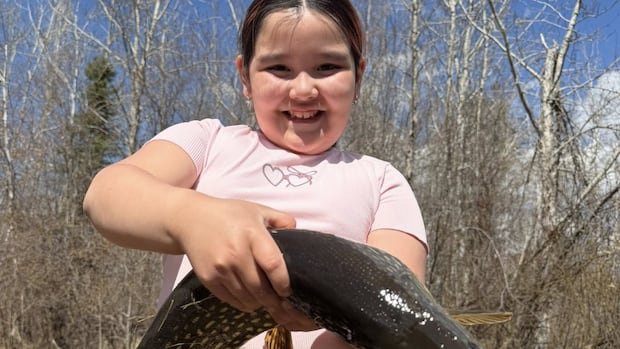

Clearwater River Dene Nation in Saskatchewan has adopted an innovative approach to education, incorporating a seasonal land-based learning model to enhance student engagement. Through this method, students like Grade 11 student Landon Moise have unique opportunities to interact with scientists, participate in sampling activities, collaborate with industry professionals at NexGen’s future mine, and engage with various individuals they wouldn’t typically encounter.
The focus of their recent lessons has been on the traditional technique of snare fishing. Led by the school’s land-based educator, Paul Haynes, students learn to construct snares using rabbit snare wire on long branches sourced from poplar or birch trees. These branches, ranging from four to 12 feet in length, are utilized for fishing purposes.
Locating the fish in the water is a key skill in snare fishing, as explained by Haynes. Mastering this art form involves visually identifying the fish in the water and aligning the snare accurately for a successful catch. Despite an initial learning curve, students eventually excel in the practice, showcasing their proficiency.
Following the challenges posed by the COVID-19 pandemic, the school observed a decline in attendance and had to reassess its teaching strategies. Previously offering camps twice a year, the school needed a fresh approach to rekindle student interest. The post-pandemic period witnessed increased anxieties, attendance issues, and reduced motivation among students, necessitating an innovative educational solution.
Presently, students like Landon find joy in attending school and recognize the practical value of their learning experiences. The school pairs older students with younger peers to provide mentorship and ensure safety during outdoor activities.
Snare fishing not only serves as a traditional fishing method but also serves as a platform to impart knowledge in both western and Indigenous sciences. Students learn about the fish’s protective slime and the proper handling techniques to safeguard them from potential harm. Ethical practices and conservation values are instilled in the students to ensure the well-being of the fish and the sustainability of their practices.
Lessons regarding the exercise of hunting and fishing rights in an ethical manner are integrated into the curriculum. Students are taught to distribute the caught fish among their families responsibly. The program emphasizes resourcefulness, with surplus fish being utilized to prepare school lunches, promoting a culture of minimal waste.
The involvement of elders Doreen Louise Moise and Pauline Fontaine, affectionately referred to as “hama” or grandmother by the students, adds a valuable dimension to the program. The elders impart traditional knowledge and skills to the students, ensuring the preservation and continuation of cultural practices for future generations.
Overall, the land-based learning approach at Clearwater River Dene Nation fosters a holistic educational environment that involves individuals of all ages, from children to elders. By blending traditional teachings with modern scientific insights, the program equips students with valuable skills while instilling a deep appreciation for their cultural heritage and the environment.