
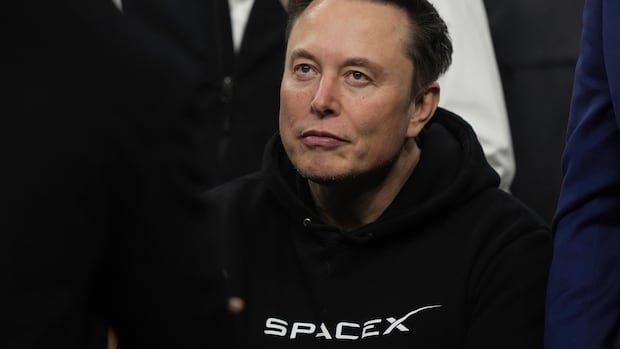

IPOs have been making waves in recent news, with several prominent private companies announcing their plans to go public. Among the highly anticipated IPOs are Elon Musk’s SpaceX, set to debut on the Nasdaq this Friday, and artificial intelligence startups Anthropic and OpenAI, gearing up for their own public offerings in the coming months.
The attention surrounding these IPOs is unprecedented due to their sheer scale. SpaceX has priced its shares at $135 US each, potentially valuing the company at $1.8 trillion US, making it one of the largest IPOs ever. Similarly, Anthropic and OpenAI are eyeing valuations close to $1 trillion US each.
Investors are drawn to these companies for their involvement in cutting-edge technologies like rockets, satellites, and artificial intelligence, with hopes that these innovations will revolutionize the global economy. However, some analysts have raised concerns about the valuation of these companies. For instance, research firm Morningstar has suggested that SpaceX may be “significantly overvalued,” pointing out the company’s history of net losses and uncertainty about future profitability.
Stephen Foerster, a finance professor at the Ivey Business School, notes that Elon Musk’s significant control over SpaceX gives him full authority over the company’s operations and strategy, emphasizing that investors are essentially betting on Musk himself.
When companies go public, the primary beneficiaries are the founders, early investors, employees with company shares, and investment banks that facilitate the IPO. Founders like Musk stand to gain billions, while venture capitalists and employees could also reap substantial rewards. Investment banks earn substantial fees for their role in organizing the IPO.
Individual investors typically face challenges accessing IPO shares at the offering price, but recent shifts have allowed more retail investors to participate. SpaceX, for instance, has allocated a larger portion of IPO shares to retail investors, increasing their chances of acquiring shares. While owning IPO shares can be lucrative, early trading can be highly volatile, with share prices subject to significant fluctuations.
Investing in IPOs like SpaceX carries inherent risks, including the untested nature of the technology, the company’s lack of profitability, and the uncertainty of stock performance post-IPO. While past IPOs like Tesla have seen remarkable returns for investors, others like Groupon experienced significant value declines shortly after going public.
As the market eagerly awaits the debut of these high-profile IPOs, investors are reminded of the unpredictable nature of investing in newly public companies and the importance of thorough research and risk assessment before diving in.