
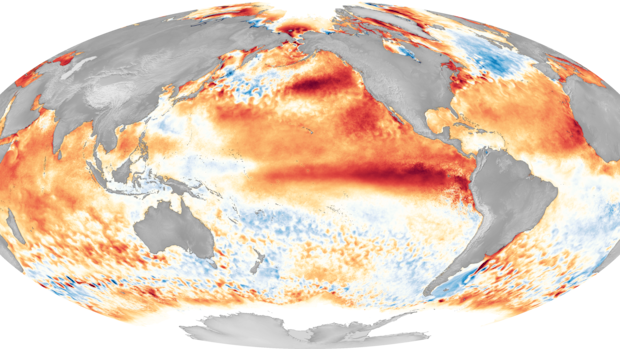

While it is still early to predict, there is significant discussion surrounding the potential emergence of an intense El Niño event in the upcoming months, which is likely to elevate the global temperature for the year and intensify extreme weather conditions.
Several climate models are suggesting a notably robust El Niño phenomenon expected to initiate in June or July and reach its peak in November, with ocean temperatures in a crucial Pacific region possibly soaring up to 2 degrees Celsius above the average. Some projections even indicate higher deviations.
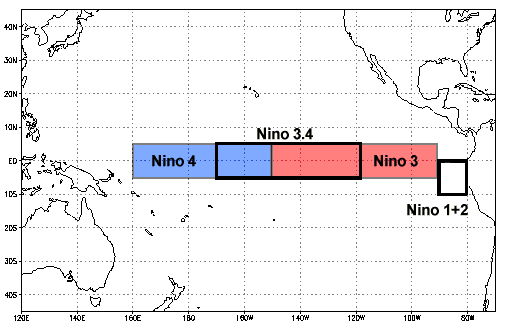
El Niño is a component of the broader El Niño-Southern Oscillation (ENSO) system, which has the capacity to influence weather patterns globally. When temperatures in the specific Pacific region known as Niño 3.4 are higher than usual, an El Niño event occurs, while colder temperatures result in La Niña conditions.
There is also a neutral phase in this cycle.
The U.S. National Oceanic and Atmospheric Administration (NOAA) has issued its monthly ENSO update, indicating that there is an 82% likelihood of El Niño development between May and July, with a 96% chance of its persistence from December to February. However, uncertainties remain regarding the intensity of the peak.
Under normal circumstances, trade winds blow westward along the equator in the Pacific Ocean, transporting warm water from South America towards Asia. Subsequently, cooler water rises from the ocean depths to replace the warm water.
During an El Niño event, this process reverses due to weakened trade winds. Current conditions indicate the formation of such an event.
Although there is a possibility of a strong or potentially ‘super’ El Niño event this year, experts suggest that its effects in Canada during the summer are unlikely. Nevertheless, the global impact of a strong El Niño event cannot be overlooked.
The positive news for Canada is that the ramifications will not be felt this summer.
Winter Expectations
The forecast indicates the development of El Niño around June or July, peaking in November or December, which typically correlates with the time frame when Canadians may experience the effects of El Niño.
According to Kent Moore, a professor of atmospheric physics at the University of Toronto, significant impacts in Canada are usually observed during the winter, particularly in Eastern and Central Canada, where winters tend to be milder.
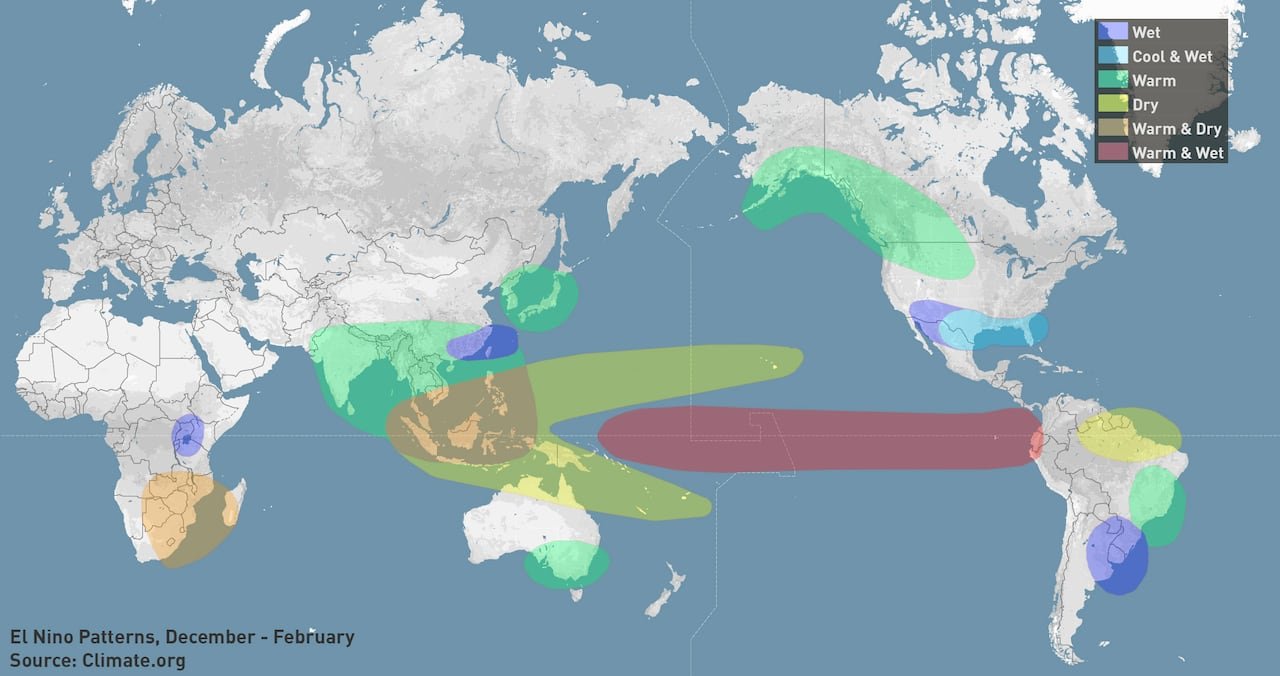
Moreover, it is not just Eastern Canada that experiences warmer conditions; the Western regions also tend to have milder winters.
During the last El Niño event, Canada experienced its warmest winter on record in 2023-2024, with a temperature anomaly of 1.5 degrees Celsius in the Pacific Ocean’s Niño