

Shortly past 8 p.m. on a recent Saturday, a young hitman, concealed in a white hoodie, departed Hotel Alamada and strolled approximately 50 meters to Plaza Morelos in Uruapan, a city in western Mexico known as the avocado capital of the world. His objective was Mayor Carlos Manzo, who had gained national recognition for openly challenging armed criminal organizations engaged in violent territorial disputes in his region.
The assassin, armed with a 9-mm Beretta handgun, navigated through the crowd in the plaza, where families with children had gathered for the Festival of Candles as part of the Day of the Dead festivities. Surveillance footage provided by local authorities depicted the assassin closing in on Manzo, who was also attired in white and accompanied by his family as he mingled with the crowd.
Upon reaching Manzo, the assailant fired seven shots before the mayor’s federal government-assigned bodyguards reacted belatedly with lethal force. The tragic incident sparked outrage, leading to protests across Michoacan, a state renowned for its lime and avocado exports to Canada. Uruapan, with a population of 400,000, stands as the state’s second-largest city.
Michoacan State Attorney General Carlos Torres Piña, overseeing the investigation, identified the deceased assassin as 17-year-old Víctor Manuel Ubaldo Vidales from Paracho, Michoacan. Torres Piña disclosed that Ubaldo Vidales was addicted to methamphetamines, absent from home for a week before the incident, and under the influence of methamphetamines and THC during the attack. Ballistics tests revealed that the weapon used by Ubaldo Vidales had been involved in three previous fatal incidents.
Manzo’s assassination triggered widespread discontent among Michoacan residents fed up with violence and impunity in their region, with protests even reaching Mexico City, 400 kilometers away. Francisco Garcia Davish, founder of Quadratin Mexico, noted an unprecedented public reaction to the political assassination, describing it as a “social rebellion.”
The violence in the protests, including vandalism of state and municipal buildings, prompted Manzo’s widow, Grecia Quiroz, to appeal for peaceful demonstrations in memory of her late husband. Quiroz, now serving as Uruapan’s mayor, emphasized the importance of seeking justice through civilized means.
The upheaval in Michoacan stems from a history of militarized operations targeting cartels in the region, leading to fragmented armed factions vying for control. Carlos Manzo stood out as a courageous mayor who defied criminal influences, a rarity in a landscape where most municipal leaders succumb to such powers.
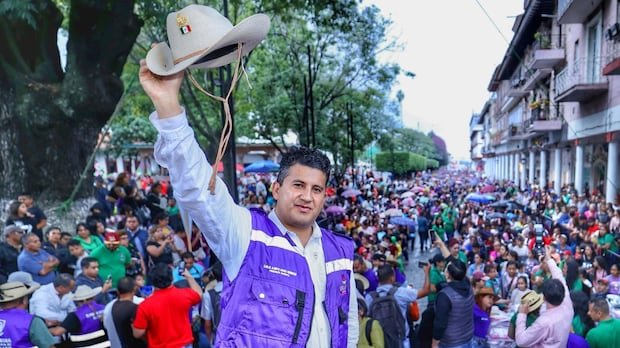
Manzo’s legacy, embodied in the “Movimiento del Sombrero” or Movement of the Hat, symbolizes a commitment to combating crime, corruption, and upholding family values. His vision for a safer Michoacan lives on through supporters like federal lawmaker Guadalupe Araceli Mendoza Arias, who remains dedicated to continuing his work.
While Manzo’s aggressive stance against criminal groups may have incited his assassination, his unwavering determination to confront cartels and promote public safety remains an enduring legacy in Michoacan’s tumultuous landscape. Mexican authorities, including President Claudia Sheinbaum, are striving to restore peace and justice in Michoacan, steering clear of past failed strategies that plunged the region into chaos and bloodshed.