
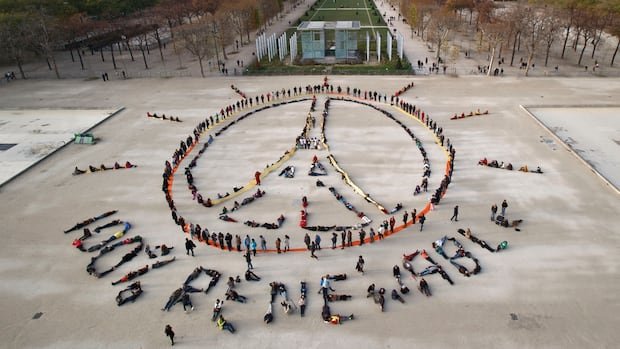

Environmental activists gathered near the Eiffel Tower during the COP21 UN climate summit in Paris on Dec. 6, 2015, forming a human chain to symbolize the peace sign and spell out “100% renewable.” This event marked the adoption of the Paris Agreement, a landmark global initiative involving nearly 200 countries to combat climate change by aiming to keep global warming “well below” 2°C compared to pre-industrial levels, with efforts to limit it to 1.5°C.
Fast forward a decade later, these nations will convene in Belem, Brazil, from Nov. 10 to 21 for the annual United Nations climate summit, COP30. Despite the agreement, atmospheric greenhouse gas levels and global temperatures have continued to rise to unprecedented heights over the past ten years.
Examining the changes post-Paris Agreement, it is evident that the average global temperature has surged by over 0.3°C since 2015. Present projections indicate a trajectory towards a 2.3°C warming by 2100 if countries uphold their climate commitments. This alarming trend could result in a doubled frequency of potentially lethal hot days annually globally.
On the technological front, there has been significant evolution in clean energy technologies such as electric vehicles (EVs) and renewable power generation. The shift towards renewable energy sources has been remarkable, with renewables surpassing coal as a predominant electricity source globally. However, the pace of transitioning to clean energy must accelerate to meet the Paris targets effectively.
Moreover, the implementation of the Paris Agreement has catalyzed the adoption of national policies worldwide, spurring the propagation of low-carbon technologies and solutions. Countries like Canada have initiated measures such as carbon pricing and electrification goals, aligning with the agreement’s objectives.
Financially, investments in green energy have exceeded $2 trillion USD in 2024, outstripping fossil fuel investments. Notably, the agreement mandates developed nations to provide financial assistance to developing countries for climate change mitigation and adaptation efforts, although funding targets have not been fully met.
While the Paris Agreement has made strides in climate action, there is a consensus among experts that intensified efforts are imperative to achieve the stipulated temperature goals. Suggestions for improvement include revising global trade treaties, mandating climate actions, and sector-specific focus during UN climate meetings for enhanced effectiveness in combating climate change.