
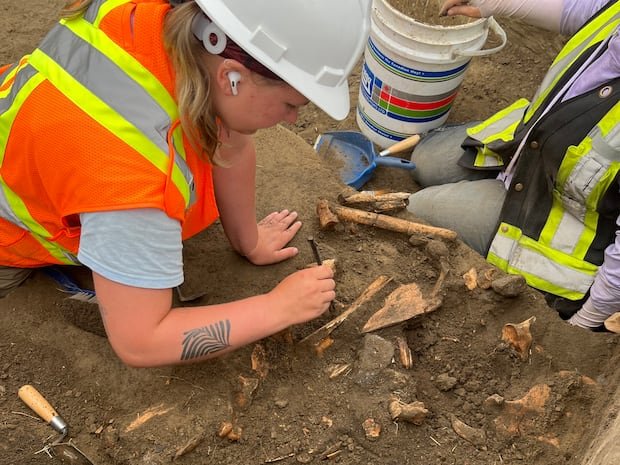

Around 240,000 artifacts discovered at an archaeological site in Moose Jaw, Saskatchewan, are shedding light on the extensive human history in the Wakamow Valley. Presentations were given by archaeologists at the Moose Jaw library last month to share their latest findings.
Bill Strongarm, a senator with the Federation of Sovereign Indigenous Nations from the Touchwood Agency Tribal Council, expressed his joy at the discovery of the site and artifacts. He described the site as a sacred traditional place that was once a camping ground for the Saulteaux and Assiniboine people en route to the Cypress Hills in southwest Saskatchewan. Strongarm mentioned that these tribes likely stopped at the site for water, food resupply, and some even stayed during winter.
Strongarm emphasized the importance of further research into the Indigenous people’s stories represented by the artifacts and expressed his hope for the construction of a heritage center to preserve the area. The artifacts, which include stone and bone tools like projectile points, scrapers, awls, and knives, also showcased tools made from bison bones.
Alan Korejbo, a senior archaeologist at Respect Heritage Consulting, mentioned that the site’s artifacts date back to both pre- and post-European contact periods, indicating human activity in the area for over 12,000 years. The site’s significance is heightened by the presence of plant and pottery evidence not commonly found in southern Saskatchewan, with recent analysis suggesting origins from areas in southern Manitoba, Ontario, and Minnesota.
Korejbo highlighted the discovery of microscopic plant residue on artifacts, such as wild rice, beans, corn, and squash, hinting at the potential cultivation of food at the site — a unique aspect possibly unparalleled in Saskatchewan. The artifacts have been sent to the Royal Saskatchewan Museum for further study to enhance understanding of the site’s history.
Both Strongarm and Korejbo expressed pride and excitement about the significance of the artifacts in reaffirming the longevity of Indigenous presence on the continent. This discovery opens up avenues for more stories and research into how Indigenous communities adapted to their environments over time.