

All nations worldwide were tasked this year with presenting enhanced strategies to combat climate change. However, the submissions have had minimal impact on curbing the Earth’s future warming, as stated in a recent report by the United Nations. The withdrawal of the United States from the initiative has offset a significant portion of progress, according to the report.
The latest climate action plans, required every five years under the 2015 Paris Agreement, are estimated to reduce future warming by approximately 0.3 degrees Celsius compared to previous projections. Only one-third of the countries that are part of the agreement, representing 63% of global emissions, have submitted updated climate plans.
Canada submitted its most recent plan in February, which has been deemed “highly insufficient” by the Climate Action Tracker. Despite setting targets for emission reductions, Canada falls short in achieving them, with forecasts indicating a substantial gap between projected and targeted reductions.
Experts at the Institut de l’énergie Trottier in Polytechnique Montreal have emphasized the need for a coordinated policy reset to transition to a net-zero energy system, as outlined in a recent report. While Canada has established a robust process for setting targets and plans, there is a lack of full implementation of these commitments.
In contrast, the U.S. administration’s policies, including the rollback of environmental regulations and hindrance to green energy projects, are expected to contribute to a 0.1-degree Celsius increase in warming, according to the UN Environment Program’s Emissions Gap report. This incremental rise in temperature can have severe implications for vulnerable communities and ecosystems globally.
The primary cause of the global temperature increase is the release of greenhouse gases like carbon dioxide from the burning of fossil fuels such as oil, gas, and coal. Countries are required to outline detailed strategies for reducing emissions in their climate action plans to mitigate this impact.
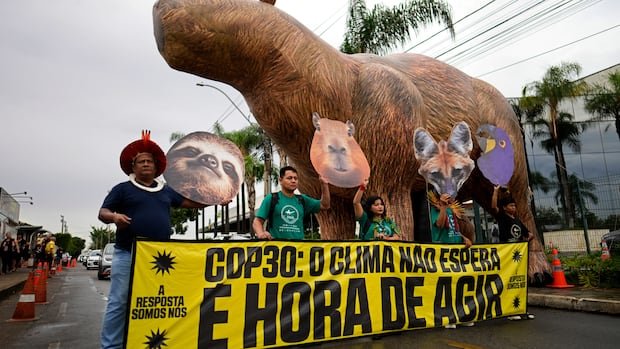
Despite efforts to cut emissions, the Earth is projected to exceed 1.5 degrees Celsius of warming since the mid-1800s within the next decade, surpassing the target set in the Paris Agreement. The current trajectory puts the planet on course for a 2.8 degrees Celsius warming, highlighting the urgency for action as the UN prepares for climate discussions in Belem, Brazil.
Efforts to swiftly reduce emissions from fossil fuels are crucial to limit global temperature rise. However, even with substantial emission cuts, temperatures are expected to increase by at least 1.7 degrees Celsius this century, necessitating additional measures to reverse this trend.
Ten years ago, prior to the Paris Agreement, the world was heading towards a 4-degree Celsius warmer future. While progress has been made, there is a pressing need to accelerate climate action to meet global targets and prevent further warming, emphasized by the UNEP executive director.
The U.S.’s decision to exit the Paris Agreement significantly alters the outlook for future emissions reductions. Despite promising emission cuts in the Biden administration’s plan, the withdrawal will impact global efforts to combat climate change. The rest of the world now faces the challenge of offsetting the increasing carbon pollution from the U.S. by cutting an additional two billion tonnes of carbon dioxide annually.
To limit warming to near the specified goals, global greenhouse gas emissions must be reduced significantly. The report underscores the imperative for decisive action by world leaders to curb emissions and address the pressing climate crisis.