
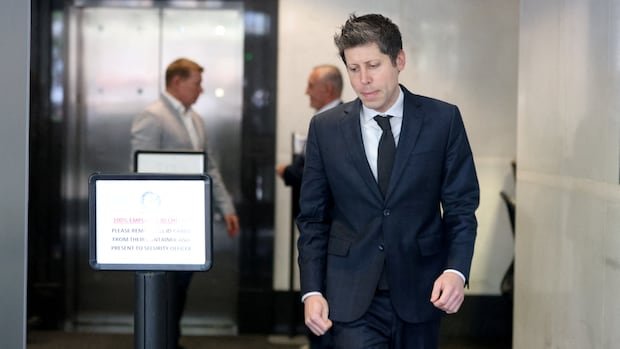

In a high-profile legal battle, Elon Musk, the wealthiest individual globally, has accused Sam Altman, the CEO of OpenAI, of appropriating a charitable organization and is demanding his removal from the company’s leadership. The trial concluded in Oakland, California, last week, with a jury set to deliberate starting Monday. The outcome, to be determined by U.S. District Judge Yvonne Gonzalez Rogers, is pivotal as Musk is pursuing $150 billion in damages, alleging that OpenAI breached its founding agreement by transitioning into a for-profit entity.
Ebrahim Bagheri, a specialist in responsible AI development at the University of Toronto, emphasized the significant impact the court’s ruling will have on the AI market. Bagheri noted the unforeseen growth and profitability of generative AI technology since OpenAI’s inception, underscoring potential ramifications for various companies, including industry giants like Microsoft.
Throughout the trial, notable Silicon Valley figures testified, while demonstrators outside the courthouse expressed discontent with both parties. Catherine Bracy, CEO of TechEquity, highlighted public sentiment, suggesting that many observers view the situation as a lose-lose scenario.
The dispute revolves around OpenAI’s transformation from a non-profit, co-founded by Musk and Altman in 2015, to a for-profit entity preparing for a $1 trillion valuation in its upcoming public listing. Musk seeks to revert OpenAI to a non-profit status and remove its president, Greg Brockman, who holds a substantial stake in the company. Musk alleges that OpenAI coerced him into providing $38 million and accepted substantial investments from Microsoft and other firms.
The conflict escalated following a leaked email exchange in February 2023, revealing strained relations between Musk and Altman. Musk emphasized the existential stakes involved, citing the “fate of civilization.” Musk’s motives have been scrutinized, as his for-profit AI venture, xAI, eyes an IPO under SpaceX, potentially prompting competitive motivations.
Musk’s courtroom testimony depicted OpenAI as a charity, contrasting its current for-profit status, and accused Altman and Brockman of misleading him. Musk referenced a conversation with Larry Page, co-founder of Google, where Page’s remarks on AI’s potential impact on humanity spurred Musk’s interest in founding OpenAI.
The legal proceedings also delved into ethical concerns surrounding AI development and control. Altman expressed reservations about consolidating AGI control under one individual, highlighting disagreements with Musk over the technology’s governance and ownership.
As the trial nears a conclusion, observers anticipate a verdict early this week. The case underscores broader themes of accountability and power dynamics in the tech industry, exemplified by the clash between influential figures like Musk and Altman.