
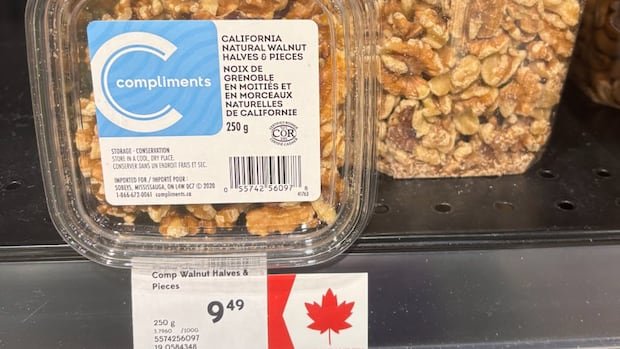

After more than a year since the inception of the Buy Canadian movement, major grocery chains Loblaw and Sobeys are under increased scrutiny for “maple washing,” which involves promoting imported products as domestically produced. The Canadian Food Inspection Agency (CFIA) imposed $10,000 fines on two Loblaw-owned stores in January for engaging in maple washing. Additionally, two other Loblaw-owned stores received formal warnings for the same violation a month later.
Sobeys has also come under the CFIA’s investigation radar. The agency received multiple complaints about Sobeys and maple washing, prompting an inquiry into the grocer’s advertising practices overseen by its head office. Although no fines were issued following the investigation, the CFIA mentioned that corrective actions were taken.
During recent visits to nine Sobeys and Safeway locations owned by Sobeys in Halifax, Toronto, Calgary, and Vancouver, it was observed that the red maple leaf symbol, previously used to highlight Canadian products in stores, had largely disappeared. This absence left products such as Tim Hortons coffee and Real Dairy ice cream without any visible indicators of their Canadian origin.
Sobeys did not provide comments on the matter. However, the grocer’s parent company, Empire, stated in late March that it was gradually removing certain Canadian signage under the belief that consumers could determine the origin of their food without explicit labeling.
Consumer advocate Jay Jackson suggested that Sobeys may have eliminated the symbol in response to the ongoing CFIA investigation, signaling a heightened level of scrutiny from the government. Jackson emphasized that consumers are increasingly demanding stricter enforcement against grocers that misrepresent product origins, particularly in cases involving “made in Canada” claims.
Despite the mounting instances of maple washing, fines for such violations have been infrequent. Since the beginning of 2025, the CFIA has identified 127 cases where retailers falsely promoted imported goods as Canadian. However, only two fines have been issued so far, both to Loblaw stores.
Steve Palmer, who has lodged multiple complaints with the CFIA regarding maple washing at Loblaw and Sobeys-owned stores in southwest Nova Scotia, expressed disappointment over the lack of penalties. Palmer cited examples such as Egyptian oranges falsely labeled as Canadian at a Superstore and California walnuts inaccurately promoted at a Sobeys location.
Federal regulations mandate that food labels and in-store signage must be accurate and non-misleading. In January, the CFIA levied $10,000 fines on two Loblaw-owned stores in Toronto for misrepresenting foreign products as Canadian. Additionally, warnings were issued to two other Loblaw-owned stores in February for similar violations.
Under federal rules, the term “product of Canada” signifies that an item is predominantly or entirely produced within the country. The CFIA mentioned that enforcement actions, including fines, are determined on a case-by-case basis, considering factors such as risk level and the offender’s history.
Loblaw acknowledged the mislabeling incidents and expressed its commitment to accurate labeling practices. The grocery chain apologized for the errors and stated that it is reinforcing store procedures to prevent such occurrences in the future.
Consumers like Palmer are advocating for stricter enforcement measures. However, the maximum penalty the CFIA can impose per violation under the Safe Food for Canadians Act is $15,000, in contrast to potential fines of up to $10 million under the Competition Act for misleading advertising offenses.
Palmer urged the Competition Bureau to investigate maple washing cases under the Competition Act, emphasizing the need for greater scrutiny and enforcement in such situations. The Competition Bureau noted that it can intervene in such matters and encouraged individuals to file complaints if they encounter misleading advertising. Shoppers were also advised to report concerns to the CFIA if they pertain to food-related issues.