
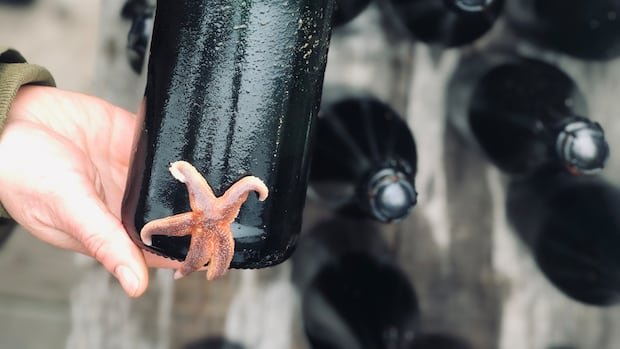

A cidery located in the eastern part of Newfoundland has initiated a unique method of enhancing the flavor of its beverages by submerging them under the sea. The Newfoundland Cider Company, based in George’s Brook-Milton, introduced its High Tide line by placing 24 bottles in the Atlantic Ocean in 2024, and has recently repeated the process for a second year.
Founder Chris Adams described the submerged cider as a blend of oceanic and orchard elements, highlighting the intriguing combination of sea and land flavors. When retrieved from the water, the bottles are adorned with salt, sand, barnacles, algae, and even marine creatures like sea stars, adding to the allure of the product.
Adams emphasized the preservation of marine life during the process, ensuring that organisms like starfish and small fish remain unharmed. The bottles are intentionally left with algae and barnacles attached, as these elements contribute to the distinctive experience of consuming High Tide cider.
The cidery’s decision to age the cider underwater was inspired by the practice of wineries aging wine at sea. By utilizing wild apples and yeast, Adams aimed to create a novel cider experience that captures the essence of Newfoundland’s coastal environment.
Opening a bottle of submerged cider unveils a unique sensory experience, enhanced by the subtle aroma of the sea. Despite its distinctive qualities, Adams reassured that the cider retains its essence as a traditional apple beverage.
Ocean aging imparts a consistent temperature to the cider, akin to the effects of cellar aging. However, the process of sinking the cider into the water presents its challenges, requiring innovative solutions like using sealed milk crates and anchoring them securely in calmer sea regions.
Experts like Jean-Benoit Deslauriers, head winemaker at Benjamin Bridge in Nova Scotia, acknowledged the mystery surrounding underwater aging and its impact on alcoholic beverages. The controlled environment underwater, with stable temperatures and absence of ultraviolet light, offers potential benefits such as preventing temperature fluctuations and light-induced damage.
While the cider company faced setbacks during their most recent underwater aging attempt due to storms, Adams remains determined to refine the process for future batches. Learning from past experiences, the company plans to select calmer sea locations and employ anchoring methods to ensure a successful outcome.
In exploring innovative methods of beverage aging, the Newfoundland Cider Company continues to push the boundaries of traditional cider production, offering consumers a truly unique and maritime-infused drinking experience.