
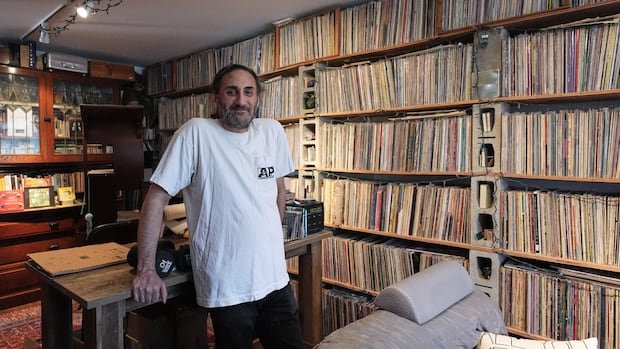

In 1989, Aadam Jacobs, a young music enthusiast armed with a compact Sony cassette recorder, attended the debut performance of an emerging rock band from Washington at a small Chicago club called Dreamerz. At the start of the show, 22-year-old Kurt Cobain introduced the band as Nirvana from Seattle before launching into their first song, “School.” Jacobs covertly captured this performance, showcasing the band in its early, energetic state over two years before Nirvana’s major breakthrough with the album “Nevermind.”
Over the next four decades, Jacobs recorded over 10,000 concerts using increasingly advanced equipment in various cities, primarily Chicago. Now, a dedicated team of volunteers in the U.S. and Europe is systematically organizing, digitizing, and uploading these recordings, forming the extensive Aadam Jacobs Collection on the internet. This collection serves as a valuable resource for music enthusiasts, especially those fond of indie and punk rock from the 1980s to the early 2000s, a period when the scene flourished and went mainstream.
Included in the collection are early performances by renowned artists such as R.E.M., The Cure, The Pixies, The Replacements, Depeche Mode, Stereolab, Sonic Youth, and Björk, along with lesser-known acts from various genres like hip-hop and jam bands. These recordings are gradually being made available for streaming and free download on the non-profit online repository Internet Archive, which includes the meticulously cleaned-up audio from Jacobs’s original cassette recordings, including the seminal Nirvana show.
Before recording the Nirvana gig, Jacobs had already been capturing concerts for five years, starting as a teenager by taping songs off the radio. He gradually transitioned to recording live shows with borrowed and later purchased recording devices, evolving from analog tape machines to digital recorders. Although many label him as an archivist, Jacobs considers himself simply a music enthusiast who saw value in documenting the live music experiences he regularly attended.
Volunteer Brian Emerick plays a crucial role in the preservation process, transferring analog recordings to digital formats for further editing and mastering before uploading them to the archive. Utilizing a setup of multiple cassette and DAT decks, Emerick estimates digitizing thousands of tapes since late 2024, with more work to be done in the coming years. Collaborating with volunteer-engineers worldwide, the team enhances audio quality, corrects metadata, and meticulously documents each recording, ensuring accuracy and completeness.
Despite the challenges of identifying song titles and potential copyright concerns, Jacobs and his team have garnered support from most artists appreciative of their work being preserved. While Jacobs has halted recording due to health issues, he continues to enjoy live music through online recordings and appreciates the evolving landscape of concert recording facilitated by modern technology and a new generation of fans.