
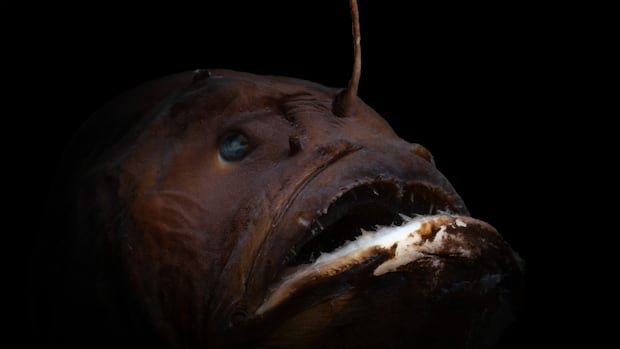

A recent study suggests that the distinctive forehead appendage of female anglerfish, known as a lure, not only attracts prey but also serves as a signal for potential mates in the deep sea. Biologist Alex Maile, the lead researcher, describes these creatures as both captivating and fearsome. The findings, published in the journal Ichthyology and Herpetology, are based on DNA analysis of over 100 anglerfish species, highlighting how different lure types may have evolved to enhance reproductive success.
Marine biologist Milton Love, not involved in the study, acknowledges the unconventional theory proposed by the researchers, challenging traditional beliefs. The diversity of anglerfish species, found in various oceans and habitats, showcases different types of lures, ranging from long to stubby, emitting chemicals or bioluminescence. This variation intrigued Maile to delve into the research further.
Through mapping various lure types onto an evolutionary tree and utilizing computer modeling, researchers determined that the first anglerfish lure emerged about 72 million years ago. The evolution of bioluminescent lures between 23 and 34 million years ago led to a surge in anglerfish diversity, indicating the role of natural selection in aiding male anglerfish to find females in the dark depths.
Male anglerfish, significantly smaller than females and lacking their own lures, rely on sensory cues like bioluminescence to locate mates. Glowing appendages are not unique to anglerfish, as other deep-sea species, such as lanternfish and dragonfish, also use bioluminescence for mating. Once a male anglerfish finds a female, they engage in a parasitic mating ritual where they fuse together, with the male providing sperm until his eventual detachment.
While this may seem like a macabre fate for the male anglerfish, researchers emphasize that it fulfills their reproductive purpose. The mating strategies and evolutionary adaptations of anglerfish shed light on the unique dynamics of deep-sea ecosystems.