
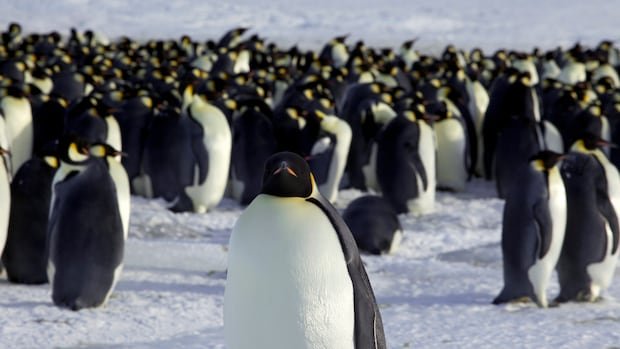

Emperor penguins, the largest species of penguins, have been officially classified as endangered due to the impact of climate change on their habitat and population, according to a recent international assessment. This reclassification signifies a troubling indication of the detrimental effects of human-induced climate change on ecosystems in Antarctica. With sea ice levels reaching record lows in the region, the penguins’ reliance on sea ice during critical periods such as chick rearing and moulting season is increasingly threatened.
The International Union for Conservation of Nature, which administers the global Red List of threatened species, highlighted that the emperor penguins’ habitat is experiencing earlier sea ice breakup as a consequence of global warming. This shift poses significant challenges for the penguins’ breeding and survival patterns. Satellite data analysis revealed a steady decline in the spring population of emperor penguins over the past decade, with a nearly 10% decrease between 2009 and 2018.
While the current estimate of breeding pairs stands at approximately 256,500 across 54 colonies as of 2020, the overall emperor penguin population faces a precarious future. The assessment warns of potential population declines ranging from 30 to 59% over the next few generations, contingent upon the extent of global warming. Despite the challenging nature of monitoring non-breeding penguins and chicks in the remote Antarctic locale, the evaluation emphasizes the urgency of conservation efforts to safeguard the species.
This significant reclassification from “Near Threatened” to “Endangered” reflects the emperor penguin’s heightened risk of extinction in the wild. The assessment also highlighted the plight of the Antarctic fur seal, which has similarly transitioned to the endangered category due to a substantial population decline attributed to environmental changes affecting its food source, krill. The assessment underscores the urgent need for enhanced monitoring and conservation measures to protect these vulnerable species in the face of escalating climate challenges.