
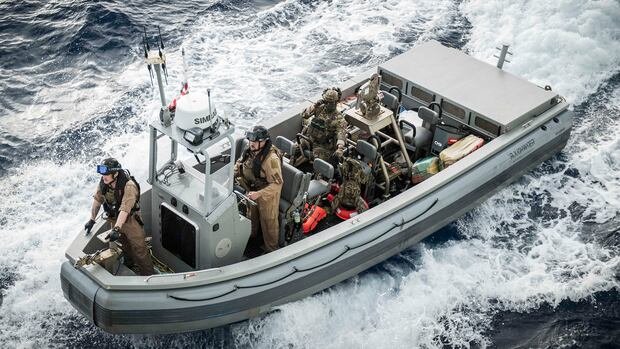

Canada’s Department of National Defence affirms its commitment to a longstanding collaboration with the U.S. Coast Guard in apprehending drug traffickers in the Caribbean region, despite recent deadly U.S. airstrikes. Operation Caribbe, in operation since 2006, entails joint efforts by the Royal Canadian Navy, Royal Canadian Air Force, and the U.S. Coast Guard to identify and intercept suspected drug vessels in the Caribbean, transferring any detainees for legal prosecution in the U.S.
While the U.S. Air Force has adopted a more aggressive approach, conducting airstrikes on four alleged drug boats resulting in 21 casualties, Canadian authorities have distanced themselves from these actions, asserting that they are unrelated to Canadian military or intelligence operations in the area. Operation Caribbe is Canada’s contribution to the broader Campaign Martillo, a multinational initiative involving 14 nations from the Americas to Europe.
Tim Addison, the director of naval affairs for the Naval Association of Canada (NAC), acknowledged the department’s attempt to separate itself from the U.S. airstrikes but expressed reservations about the legality and implications of such operations. Scholars and Human Rights Watch have raised concerns over the legality of the strikes, labeling them as extrajudicial killings.
Eric Ouellet, a defense studies professor, emphasized the delicate position Canada finds itself in due to the U.S. strikes, emphasizing the need to avoid involvement near Venezuela to mitigate risks of intelligence misuse in lethal actions. While there are apprehensions about potential repercussions, Ouellet believes that Canada’s assets are well-equipped to address other security challenges in the region.
Despite the complexities and controversies surrounding recent events, Operation Caribbe remains a vital joint effort that has successfully intercepted significant volumes of cocaine since its inception in 2006.