
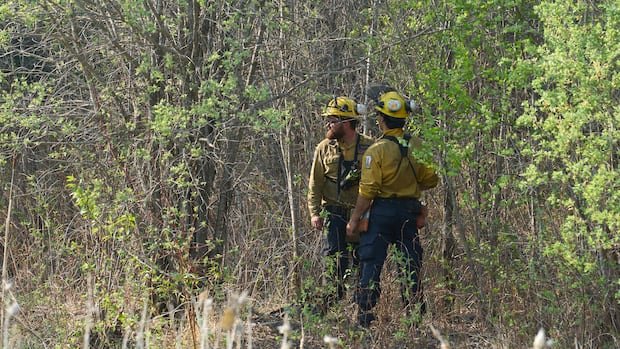

After extinguishing a wildfire, smoke rises from smoldering spots, contaminating the air with harmful substances that firefighters may inhale for extended periods. A former wildland firefighter from Manitoba highlighted this phase as the peak of poor air quality during fire suppression efforts. They emphasized experiencing black residue while blowing their nose after battling blazes, acknowledging the occupational hazards that come with the job.
As Canada witnesses longer and more active wildfire seasons, experts caution that prolonged exposure to the gases and particulate matter in smoke can pose health risks. Christopher Pascoe, an associate professor at the University of Manitoba specializing in chronic respiratory diseases, advised limiting smoke exposure as much as possible to mitigate potential health consequences.
In Manitoba, efforts to protect firefighters from air pollution include providing disposable masks and training. However, the use of masks poses challenges during strenuous activities lasting up to 15 hours a day, with concerns raised about the obstructive nature of face coverings in an already demanding environment.
While certain masks like respirators can offer effective filtration against wildfire smoke particles, their utilization presents logistical challenges for wildland firefighters. The Manitoba Government and General Employees’ Union voiced concerns about the practicality of bulky face coverings, citing potential impediments to firefighters’ mobility and efficiency.
Despite the availability of disposable N95 masks for firefighters in Manitoba, Pascoe highlighted limitations associated with their use, such as inadequate protection against hazardous gases and possible discomfort during exertion. He advocated for innovative solutions to enhance respiratory protection for firefighters battling wildfires.
In addressing the issue, Manitoba Natural Resources Minister Ian Bushie emphasized the importance of balancing protection from wildfire smoke with the physical demands faced by firefighters. The province aims to consider the effects of wearing masks, taking into account concerns like heat exhaustion and breathing difficulties raised by firefighting personnel.
In British Columbia, alternative strategies to minimize smoke exposure include rotating crews in smoky areas, completing final cleanup operations post-fire containment, and providing clean air spaces at sleep camps. Natasha Broznitsky from the BC Wildfire Service stressed the multi-faceted approach required to safeguard firefighters’ health amidst challenging wildfire conditions.
As wildfire seasons intensify, the provision of effective respiratory protection becomes paramount in safeguarding firefighters’ well-being. Collaborative efforts between academia, government agencies, and firefighting personnel are crucial in developing and implementing solutions to mitigate the health risks associated with prolonged exposure to wildfire smoke.