
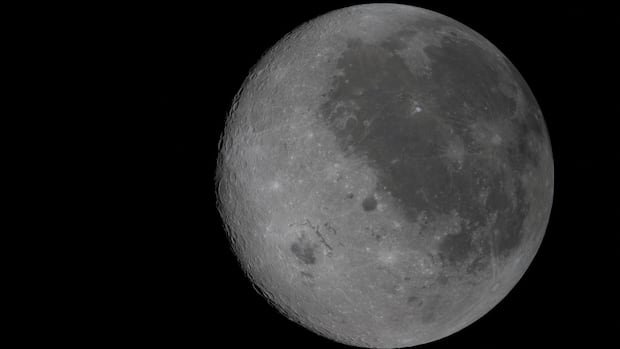

The Orion spacecraft of Artemis II set a new record for the farthest humans have traveled from Earth at 1:57 p.m. ET. Mission control lost contact with the crew for about 40 minutes around 6:44 p.m. ET as the spacecraft passed behind the moon. By 7 p.m. ET, the crew experienced their closest approach to the moon, witnessing parts of the moon’s far side with the naked eye. The spacecraft entered an eclipse at approximately 8:32 p.m. ET, with the sun behind the moon from the crew’s viewpoint for about an hour. The lunar flyby observation concluded around 9:35 p.m. ET, with the crew preparing to transfer images to NASA’s ground team as they make their way back home.
During a total solar eclipse on Monday evening, the Artemis II crew struggled to articulate the breathtaking views, with pilot Victor Glover mentioning the indescribable nature of the experience. Commander Reid Wiseman described the sights as “absolutely spectacular” and “surreal,” emphasizing the need for new adjectives to capture the scene. The crew witnessed meteors hitting the moon, observed details on the moon’s surface, and spotted Mars, Venus, and Saturn in the distance.
The historic mission marked a significant milestone as the crew surpassed the previous distance record set by Apollo 13 in 1970. With the capsule now aimed back towards Earth, a landing is scheduled for Friday. Following a 40-minute communication blackout during the spacecraft’s passage behind the moon, the crew reestablished contact with mission control, sparking joy and gratitude among the astronauts.
Mission specialist Christina Koch expressed delight at hearing from Earth again and reflected on the importance of unity and the planet’s significance. The crew’s distance record was officially broken at 1:57 p.m. ET, surpassing the milestone set by Apollo 13. The Canadian Space Agency highlighted astronaut Jeremy Hansen and his American crewmates as the new record holders for venturing farthest into space.
After proposing to name two lunar craters Integrity and Carroll, in honor of Wiseman’s late wife, the crew shared emotional moments, emphasizing the majestic views witnessed during their journey. As they head back to Earth, the crew will continue their observations and data collection, contributing valuable insights for future lunar exploration efforts.
As Artemis II progresses towards its return journey, the astronauts’ experiences and observations mark a significant advancement in space exploration, characterized by unprecedented sights and discoveries.