

The Woodland Cultural Centre, a newly opened museum located in Brantford, Ontario, was once the longest-operating residential school in Canada. The center’s grand opening took place on the National Day for Truth and Reconciliation, attracting a large crowd to the renovated facility showcasing Indigenous language, culture, art, and history.
Visitors who attended the event expressed various reasons for being there. Some were eager to delve into the history of the former Mohawk Institute, while others sought to pay tribute to their ancestors who were compelled to attend the school. Over its operational years from 1828 to 1970, the residential school, administered by the Anglican Church and the federal government, saw around 15,000 children from 60 communities enrolled.
Among the attendees was John Moses, accompanied by his cousins Lesley and Patty Davis, who shared their mixed Mohawk and Mohican Delaware heritage. Moses emphasized that during this fifth year of observing Truth and Reconciliation Day, the focus should be on non-Indigenous Canadians acknowledging and accepting the true historical narrative of the country, with families like theirs providing crucial testimony.
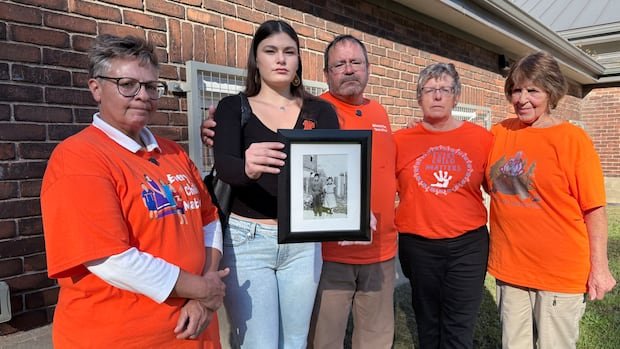
During their visit to the museum, the trio stood before a framed photo of Moses’s father and Lesley and Patty’s mother, taken in 1943 when they were pupils at the institute. The poignant image captured a brief monthly visit allowed by the school, reflecting the harsh reality faced by the students. Moses mentioned that his father documented his school experience in a memoir in 1965, highlighting the resilience and accomplishments of his parents beyond the challenging school years.
The Woodland Cultural Centre, established two years after the residential school’s closure, has been closed to the public since 2019 for renovations. Heather George, the center’s executive director and chief curator, emphasized the significance of the museum as a tangible testimony to the residential school era, hoping it would serve as a catalyst for visitors to deepen their understanding of Indigenous history and its contemporary implications.
The museum’s opening also drew cousins Carol McDonald, Brian Burleigh, and Cathy Mountenay, whose grandmother was a former student at the Mohawk Institute. Burleigh reflected on the importance of honoring the resilience of those who endured the hardships of residential schools and stressed the need to openly acknowledge and learn from this chapter of history.
Additionally, siblings Jessica and Kyle Nguyen visited the museum to expand their knowledge of local Indigenous history after participating in a course on the history of marginalized workers. Kyle underscored the importance of building allyship among diverse communities by understanding and respecting each other’s pasts.
Former Woodland Cultural Centre director Janis Kahentóktha Bomberry played a pivotal role in the institute’s restoration campaign, aiming to preserve its legacy and educate future generations about the atrocities of the residential school system. The restoration efforts include a language center, symbolizing a defiant stance against the suppression of Indigenous languages and cultures.
The grand opening of the museum marked a significant step in recognizing the traumatic legacy of residential schools and fostering dialogue on reconciliation and healing. The event served as a platform for individuals to share personal stories, honor their ancestors, and collectively confront the painful history of Indigenous communities in Canada.