
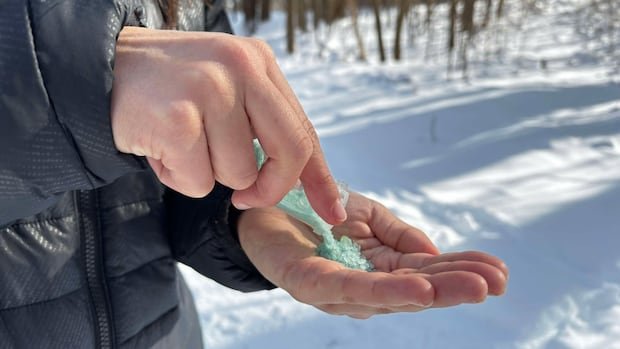

As an Arctic blast grips southwestern Ontario and municipalities grapple with a shortage of road salt, there is a growing interest in exploring alternative methods to de-ice roads. Researchers at Western University have initiated a study in 2022 to investigate this issue, with the results expected to be unveiled later this summer.
The study is evaluating nine different substances to assess their efficacy in melting road ice under various conditions. Christopher Power, an associate professor involved in the research, highlighted that sodium chloride, commonly known as rock salt, is widely used by Ontario municipalities due to its affordability.
While rock salt effectively clears ice by lowering water’s freezing point, it also poses drawbacks. It is corrosive, leading to premature wear and tear on metal structures near roads and vehicles. Moreover, the excessive use of salt leads to environmental concerns, with much of it ending up in water bodies, causing salinization and harming freshwater ecosystems.
The research at Western University is exploring alternatives to rock salt, such as sodium acetate and beet juice, which have shown promise in melting ice in other applications. The study involved testing these substances on designated areas of the university campus to determine their melting efficiency and corrosiveness levels.
Despite the ongoing research, there is no definitive replacement for sodium chloride at present. Economic considerations play a significant role in the selection of de-icing substances, as rock salt remains a cost-effective option for municipalities facing budget constraints. However, Power suggested the potential use of less corrosive alternatives in specific areas, like bridges or water bodies, to mitigate environmental impact.
Many municipalities are adopting a targeted approach to salt usage, especially in light of the current salt shortage. For instance, the City of London plans to increase plowing frequency while reducing salt application, opting for a sand-salt mixture during extreme cold spells. This shift in strategy aims to balance road safety with environmental concerns associated with traditional rock salt usage.