
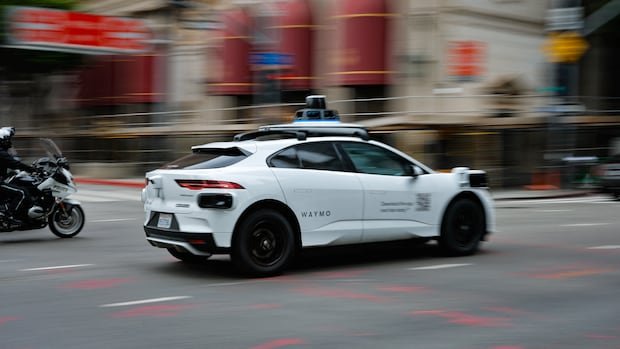

A recent study by the U.S. Insurance Institute for Highway Safety revealed that Waymo driverless cars were involved in 68% fewer crashes than human drivers across San Francisco, Phoenix, Los Angeles, and Austin from 2021 to 2024. During this period, there were 89 police-reportable crashes involving Waymo vehicles, compared to 901,525 human-caused crashes in the same locations. The study highlighted that the majority of Waymo-involved crashes occurred when the vehicle was operating in a completely driverless mode.
According to the research, Waymo vehicles covered about 80 million kilometers in driverless operation, while human drivers traveled approximately 355 billion kilometers in the same areas over the three-year span. The study evaluated the crash rates per million vehicle miles traveled, with Waymo vehicles significantly lower at 1.28 crashes compared to human drivers at 4.06 crashes per million vehicle miles.
The study, based on data collected from police reports, Waymo, and federal databases, showcased the positive performance of Alphabet’s driverless technology. The results indicated that Waymo vehicles were involved in less severe crashes than human-driven vehicles, offering a promising outlook for the driverless industry. While experts acknowledge the potential of driverless vehicles, they emphasize the need for transparent data reporting and understanding of the technology’s limitations.
Despite the success of Waymo in the U.S., challenges remain for its expansion into Canada, where regulatory barriers and climatic conditions pose obstacles. The company’s efforts to introduce driverless vehicles in Toronto have faced resistance, with concerns about job displacement and climate adaptation. While Waymo continues to improve its technology, experts caution that widespread adoption of driverless vehicles may still be years away, with ongoing learning and development needed to address technical challenges and public skepticism.