
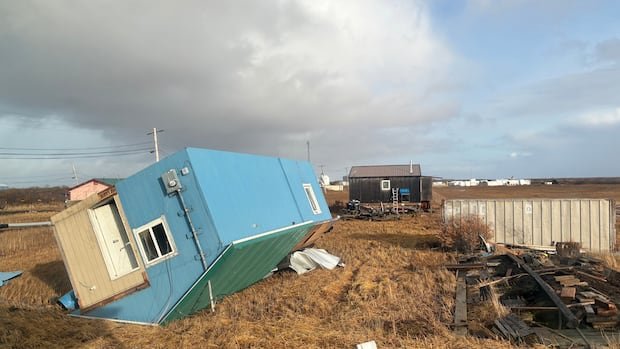

In western Alaska, the aftermath of Typhoon Halong led to the tragic death of one person and left two individuals missing. The storm brought destructive hurricane-force winds, storm surges, and flooding that washed away several homes, causing extensive damage. Over 50 individuals have been rescued, with some rescued from rooftops. Authorities have emphasized the ongoing need for support in the severely affected communities as they face a challenging path to recovery.
Describing the situation as “absolute devastation,” U.S. Coast Guard official Capt. Christopher Culpepper highlighted the impact on the villages of Kipnuk and Kwigillingok. Alaska State Troopers reported the rescue of at least 51 people and two dogs in these areas, which experienced significant storm surges according to the National Weather Service.
Tragically, a woman was found deceased in Kwigillingok, and two individuals remain missing. The Alaska State Troopers initially sought to confirm reports of missing persons in Kipnuk but later confirmed that no one was unaccounted for in that area. The Coastal Villages Region Fund reported that most residents sought refuge in local schools in both Kipnuk and Kwigillingok.
Kwigillingok, a community of about 380 residents on the western shore of Kuskokwim Bay near the mouth of the Kuskokwim River, is particularly vulnerable to flooding due to its low-lying location. A recent report by the Alaska Institute for Justice highlighted the increasing frequency and severity of flooding in the region, underscoring the urgent need for community relocation.
Beyond housing challenges, residents affected by the storm faced power outages, water supply disruptions, food spoilage, and damage to heating systems. The damage could complicate the upcoming winter for remote communities dependent on stored food from hunting and fishing.
Local residents, like Jamie Jenkins from Napakiak, described the storm as the most severe they had ever witnessed, with fierce winds and rapid flooding. The community rallied together to rescue those in need, highlighting the resilience and solidarity in the face of adversity.
During a news conference led by Governor Mike Dunleavy, Senators Lisa Murkowski and Dan Sullivan pledged to prioritize climate resilience and infrastructure funding for Alaska. They emphasized the urgency of addressing climate-related challenges, such as erosion and melting permafrost, which pose significant risks to infrastructure and community well-being in the state.