
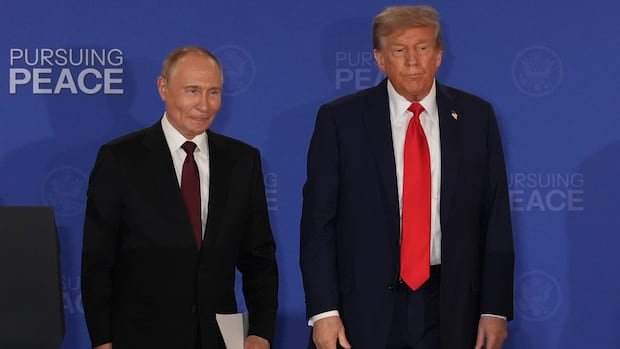

U.S. President Donald Trump announced plans for a future meeting with Russian President Vladimir Putin to discuss resolving the ongoing conflict in Ukraine. Although no specific date has been set, Trump revealed on social media that the meeting is expected to occur in Budapest, Hungary. Following a recent phone call between Trump and Putin, Trump expressed optimism about the progress made during their conversation. This upcoming meeting follows a previous encounter in Alaska in August, which did not result in a breakthrough.
Before Trump and Putin convene, U.S. officials, led by Secretary of State Marco Rubio, are scheduled to engage in discussions with Russian counterparts next week, although the exact location of the meeting remains uncertain. In preparation for the meeting, Trump is set to meet with Ukrainian President Volodymyr Zelenskyy at the White House on Friday. Zelenskyy has been urging Trump to provide Kyiv with Tomahawk missiles, enabling Ukrainian forces to target deeper into Russian territory with the aim of prompting Putin to take negotiations between Russia and Ukraine more seriously.
Trump, who previously indicated a focus on Gaza, has redirected his attention to resolving the conflict in Ukraine. Following a temporary ceasefire in Israel-Hamas tensions, Trump now aims to end the conflict in Ukraine and is considering supplying Kyiv with long-range weaponry to encourage Moscow to engage in negotiations. Trump acknowledged progress in addressing the Russia-Ukraine conflict, attributing some advancements to recent developments in the Middle East.
Zelenskyy is anticipated to request Trump’s support in imposing further sanctions on Russia to weaken its economy, a move Trump has been hesitant to endorse thus far. While Congress has explored legislation for stricter sanctions on Moscow, Trump has predominantly emphasized pressuring NATO allies to cease purchasing Russian oil, a crucial resource sustaining Russia’s military operations. In a notable development, India, a significant buyer of Russian oil post-Ukraine invasion, has reportedly agreed to halt its oil imports from Moscow.
The White House has shown increased interest in proposed legislation that would impose tariffs on countries purchasing Russian exports, signaling a potential shift in Trump’s stance. Administration officials have been actively reviewing the legislation, indicating a growing seriousness towards its implementation. Treasury Secretary Scott Bessent emphasized the need for European support in countering Russian aggression, underscoring the broader implications of the conflict for European nations.