
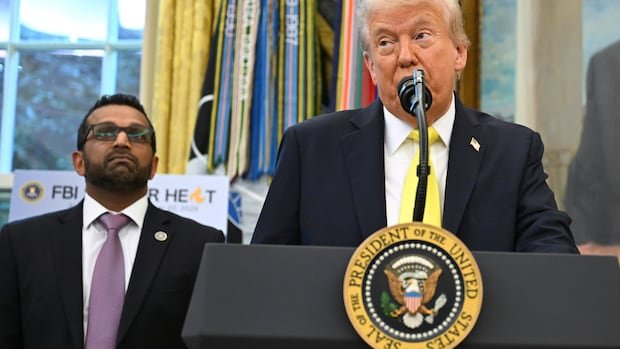

U.S. President Donald Trump announced on Wednesday that he had given the CIA the green light to carry out covert operations in Venezuela, signaling a significant escalation in U.S. efforts to exert pressure on President Nicolas Maduro’s administration.
The directive, initially disclosed by The New York Times and sourced from U.S. officials familiar with the decision, outlines the Trump administration’s strategy to oust Maduro from power. As part of this approach, the administration has put forth a $50 million reward for information that leads to Maduro’s apprehension and conviction on drug trafficking charges.
Trump justified his authorization by pointing to the substantial influx of drugs entering the United States from Venezuela, with a significant portion of it being trafficked by sea. He noted a shift in focus from sea to land operations due to the perceived effectiveness of controlling maritime routes.
In response to the drug trafficking issue, Trump ordered a considerable military reinforcement in the southern Caribbean region. Since early September, the U.S. has carried out at least five strikes on vessels allegedly involved in drug trafficking, resulting in the deaths of at least 27 individuals. Trump even shared a video on Truth Social showing one such strike on a stationary vessel.
Venezuela’s foreign ministry strongly condemned Trump’s statements, labeling them as a severe breach of international law and the United Nations’ Charter. Foreign Minister Yván Gil Pinto issued a statement via his Telegram channel denouncing the remarks.
Contrary to Trump’s claims, U.S. records have indicated that Mexico serves as the primary source of the drug fentanyl, not Venezuela. When questioned about the absence of Coast Guard intervention in suspected drug trafficking operations, a long-standing U.S. practice, Trump dismissed such actions as ineffective and overly cautious.
The administration’s military actions in Venezuela form part of Trump’s broader utilization of U.S. military power in unconventional ways. The Pentagon recently informed Congress that the U.S. is involved in a non-international armed conflict with drug cartels, as determined by Trump.
When pressed about the CIA’s potential role in Maduro’s removal, Trump evaded a direct response, emphasizing the mounting pressure on Venezuela. The administration has doubled the reward for Maduro’s arrest to $50 million, citing his alleged ties to drug trafficking and criminal organizations, allegations Maduro vehemently denies.
Maduro has adamantly opposed any regime change efforts, drawing parallels to past U.S. military interventions in countries like Afghanistan, Iraq, and Libya. Trump’s accusations of Venezuela releasing prisoners into the U.S., including individuals from mental health facilities, have raised concerns without specific border crossing details.
Sen. Jeanne Shaheen, a prominent Democrat in the Senate’s foreign relations committee, criticized the administration’s actions, cautioning that they could lead the U.S. toward direct conflict. Republican Sen. Rand Paul has also voiced dissent over the strikes, though a recent Senate vote to halt the operations failed to secure sufficient Republican backing.