
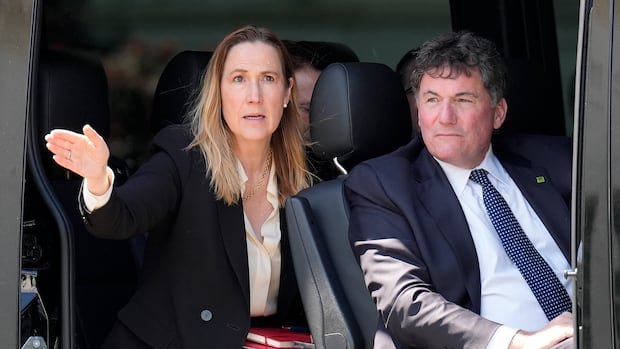

High-level trade discussions between Canadian and U.S. representatives are underway this week in Washington, D.C., with a focus on resolving trade issues in key economic sectors. Dominic LeBlanc, Canada’s Minister of Canada-U.S. Trade, along with Privy Council Clerk Michael Sabia and other officials, are concentrating on reaching agreements in the steel, aluminum, and energy industries in the short term.
Jean-Sebastien Comeau, spokesperson for Minister LeBlanc, confirmed that the talks aim to advance negotiations with senior U.S. officials. Following Prime Minister Mark Carney’s recent visit to Washington, LeBlanc noted positive and substantive dialogues on trade matters with U.S. officials.
Meanwhile, pressure is mounting domestically as some provincial leaders and mayors advocate for a firmer stance from Carney against U.S. President Donald Trump. The discussions are ongoing amidst escalating tensions, prompting calls for decisive action.
LeBlanc reported that Trump instructed U.S. Commerce Secretary Howard Lutnick and Trade Representative Jamieson Greer to continue engaging with their Canadian counterparts to finalize agreements in the aluminum, steel, and energy sectors. The objective is to swiftly achieve mutually beneficial outcomes in these critical areas.
If agreements are swiftly reached, LeBlanc expressed optimism that discussions could expand to cover progress in other sectors. The effects of the trade dispute are significant, with Trump’s imposition of tariffs leading to strategic shifts in manufacturing locations. Stellantis recently announced a substantial investment in expanding manufacturing capacity in the U.S., resulting in the relocation of the Jeep Compass production from Canada to the United States.
The decision has sparked discontent among federal and provincial authorities who had previously secured agreements with the company. Ministers emphasized the need for Stellantis to uphold commitments made to Canadian workers amid the shifting production plans.
Ontario Premier Doug Ford and Industry Minister Mélanie Joly expressed disappointment over the developments, attributing the changes to tariff policies. Efforts are underway to address the implications of these decisions and explore alternative opportunities for affected regions.
Separately, the U.S. imposed additional tariffs on Canadian lumber, further straining trade relations. Carney’s promised support for the softwood lumber industry awaits implementation, prompting calls for immediate action to safeguard Canada’s forestry sector.
Provincial leaders, including B.C. Forestry Minister Ravi Parmar and New Brunswick Premier Susan Holt, are urging swift resolution of the lumber tariffs issue. They seek immediate support to mitigate the impact on the forestry industry and enable companies to navigate the challenging trade environment effectively. Joly assured that assistance for the lumber sector would be forthcoming, encompassing operational and capital support to sustain businesses amid tariff pressures.