
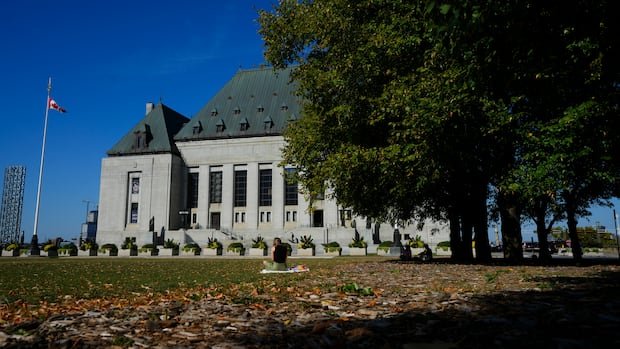

The Supreme Court of Canada has upheld the exoneration of an individual who was detained at a drug overdose incident, affirming his protection under a statute aimed at diminishing substance-related fatalities.
In a 6-3 ruling issued on Friday, the highest court stated that Paul Eric Wilson’s apprehension in Saskatchewan half a decade ago significantly infringed upon his Charter rights due to the safeguard provision of the Good Samaritan Drug Overdose Act.
The Good Samaritan law, passed by Parliament in 2017 as an amendment to the broader Controlled Drugs and Substances Act, was designed to prevent overdose deaths. It stipulates that individuals seeking emergency medical or law enforcement aid cannot face charges or convictions for mere drug possession if the evidence was uncovered because of their seeking help or remaining present at the emergency scene.
Wilson was in Vanscoy, Sask., in September 2020 with three companions when one of them fell unconscious after using fentanyl. Vanscoy is situated approximately 25 kilometers southwest of Saskatoon.
Following a 911 call made by a group member, an RCMP officer arrived at the scene. Wilson was arrested for drug possession and subsequently detained again after a search. Although no drug charges were brought against Wilson, he was eventually found guilty on multiple firearm and identity document offenses.
In 2023, the Saskatchewan Court of Appeal quashed Wilson’s convictions and acquitted him, determining that his first arrest was illegitimate due to the Good Samaritan provision protecting him from a simple possession charge.
In its recent judgment, the Supreme Court affirmed the Court of Appeal’s decision. Pierre Hawkins, a public legal advocate at the John Howard Society of Saskatchewan, which intervened in the case, praised the ruling, emphasizing the importance of prioritizing medical treatment over arrests in such situations.
Justice Andromache Karakatsanis, writing for the majority of the top Canadian court, highlighted that the immunity from prosecution and conviction for simple possession explicitly outlined in the Good Samaritan provision includes immunity from arrest for that offense as well. Karakatsanis stressed that such an interpretation aligns with the provision’s primary goal of saving lives.
The Vancouver-based Pivot Legal Society, another party involved in the Supreme Court case, also commended the decision, viewing it as a crucial ruling amidst ongoing drug policy debates. Caitlin Shane, a staff attorney at the organization, hailed the decision as a step in the right direction.
Hawkins of the John Howard Society underscored that the ruling provides clear guidance to law enforcement officers responding to overdose calls, urging a focus on administering life-saving medications like naloxone rather than resorting to arrest measures.