
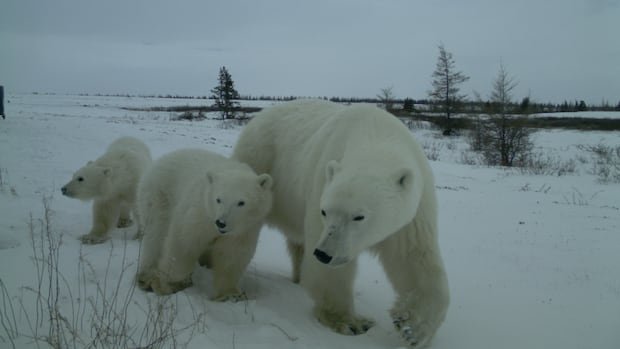

A growing number of polar bears have been spotted near communities in Canada’s northern regions in recent years, raising concerns about human encounters. Initially, it was believed that these bears, driven ashore by diminishing sea ice, were starving and potentially seeking food, including humans. However, a comprehensive 11-year study conducted by researchers from the University of Saskatchewan and University of Manitoba has revealed a different perspective on the situation.
Contrary to common assumptions, the study found that the bears frequenting shorelines were not necessarily undernourished. Douglas Clark, a professor at the U of S, emphasized that all bears, regardless of their body condition, age, or sex, were more likely to come closer to human settlements the longer they stayed off the ice. This behavior indicated that the increased human encounters were primarily due to the bears spending more time on land.
Clark initiated the monitoring of polar bears 15 years ago by deploying trail cameras in Wapusk National Park near Hudson Bay. The study aimed to understand why polar bears were interacting more frequently with humans. The researchers, including Clark, compiled over a decade of data, observing more than 500 polar bear visits, studying sea ice patterns, and correlating these findings with human activities in the region.
Published in Arctic Science, the study highlighted that the polar bears did not display an intentional interest in humans. The shrinking sea ice caused by climate change was the driving force behind the bears’ prolonged presence on land, bringing them closer to human-inhabited areas. While some bears were indeed hungry, they did not exhibit predatory behavior towards humans.
Alex Crawford, an assistant professor at the U of M, emphasized that the polar bears’ interactions with humans were linked to their prolonged stay on land due to diminishing sea ice, rather than their health status. Crawford stressed that understanding these dynamics was crucial to avoid misconceptions about polar bears becoming more aggressive towards humans due to food scarcity.
The research team plans to continue monitoring polar bear behavior to assess any long-term shifts in their habits and responses to changing environmental conditions. The ongoing study aims to provide valuable insights into how polar bears adapt to habitat modifications and fluctuations in their food supply over time.