
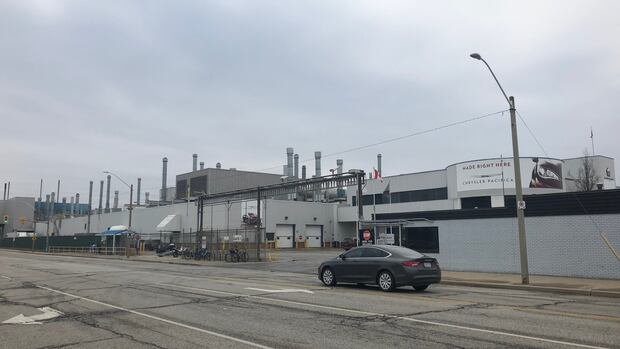

A Stellantis executive faced tough questioning from Members of Parliament on Wednesday regarding the Canadian auto job retention assurances supposedly included in recent subsidy agreements with the federal government. Jeff Hines, the former president of Stellantis Canada, affirmed the company’s dedication to the Canadian auto industry during his testimony at a House of Commons committee. However, he refrained from explicitly confirming the existence of safeguards for current positions in previous deals.
Hines emphasized the company’s loyalty to its Brampton and Canadian employees but stated that certain details of the contracts remain confidential. Despite this, he reiterated Stellantis’ commitment to preserving the Canadian workforce. The executive’s appearance followed significant backlash over the decision to shift production of the Jeep Compass from the Brampton plant to the Belvidere Assembly Plant in Illinois, leaving Brampton workers uncertain about their future.
Having recently assumed the role of Head of North America Fleet Solutions at Stellantis, Hines previously served as the company’s Canadian president. Stellantis, known for brands like Dodge and Chrysler, currently employs approximately 9,000 workers in Canada and plans to hire an additional 1,500 employees in Windsor, Ontario, the automotive hub of the country.
Hines disclosed that Stellantis has invested $8.6 billion in Canada since 2022 and aims to further expand its presence in the country. He highlighted economic and trade uncertainties as factors influencing the company’s future trajectory. Addressing the House of Commons Standing Committee on Industry and Technology, Hines participated in an emergency study on the automotive sector and the government’s financial agreements with Stellantis following the developments at the Brampton plant.
While affirming ongoing plans for the Brampton facility, which had around 3,000 employees before its temporary closure for retooling, Hines mentioned that several options are being considered for the plant’s future. He cited the prevailing economic conditions as a determinant in the decision-making process. The company remains focused on finding a sustainable solution to support laid-off Brampton workers in the long term, with transfer opportunities being offered to affected employees.
Stellantis had previously committed to maintaining its Canadian operations, including the Brampton and Windsor plants, as part of a multi-billion dollar federal-provincial agreement to establish Canada’s first electric vehicle battery plant in Windsor. However, an analysis of the documents revealed no explicit guarantee of job retention, prompting further scrutiny. The federal government did not respond to inquiries regarding this matter.
During the committee session, Windsor-Tecumseh-Lakeshore Conservative MP Kathy Borrelli inquired about the company’s future plans in Windsor, a crucial region for the automotive industry. Hines assured that maintaining Stellantis’ presence in Windsor was a top priority and expressed enthusiasm for the company’s expansion to a third shift. He also highlighted the progress at the NextStar EV Battery Plant in Windsor, which has already hired 1,000 employees out of an anticipated 2,500 total positions.
The committee was scheduled to hear testimonies from Flavio Volpe, the President of the Automotive Parts Manufacturers’ Association, and representatives from Unifor, the union representing workers at Stellantis and other major automakers in Canada.