
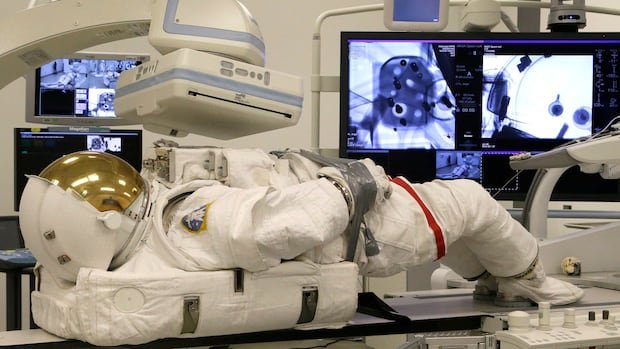

Innovative medical tools like ear thermometers, portable ultrasounds for iPhones, and virtual doctor appointments have origins in space technology. Experts predict that deep space exploration will introduce new advancements to healthcare on Earth, such as portable medical devices and robotic assistance. These innovations are expected to greatly benefit remote and under-resourced communities.
Dr. Dave Williams, a former emergency room doctor and astronaut from Toronto, highlighted the potential transfer of knowledge from lunar habitats to improve remote medical care, especially in regions like northern Canada. Researchers like Dr. Farhan Asrar and Williams are exploring healthcare innovations related to deep-space missions, including missions to the Moon and Mars.
As deep-space missions become longer and more distant, astronauts may face challenges accessing immediate medical care on Earth. Dr. Tarek Sardana noted that advancements in communication technology will be crucial for virtual care, as delays in receiving medical instructions from Earth could impede timely healthcare delivery to astronauts on Mars.
Moreover, the development of wearable technology for vital sign monitoring, robotic support for individuals at risk of falling, and exoskeletons for people with disabilities is on the horizon. These advancements could revolutionize healthcare delivery both in space and on Earth.
In the realm of space medicine, innovations often benefit terrestrial healthcare, creating a symbiotic relationship between the two fields. Portable medical technology is essential for space missions due to limited space for heavy equipment, and similar lightweight tools could assist physicians in remote or disaster-affected areas on Earth.
Dr. David Saint-Jacques emphasized the challenges faced by healthcare providers in remote communities, where limited resources and long travel distances impact the standard of care. He drew parallels between providing healthcare in isolated Canadian communities and in space, highlighting the need for adaptable medical solutions.
While space technology innovations hold promise for Earth, Saint-Jacques noted that the development and testing of new tools typically occur on Earth before being utilized in space missions. Organizations like the Canadian Space Agency prioritize technologies with potential benefits for both space and Earth applications when allocating funding.
Although advancements in robotics and automated healthcare are underway, the implementation process on Earth can be slow due to costs and regulatory hurdles. Despite this, ongoing developments in space technology, such as the Artemis II mission, are expected to accelerate innovation in healthcare, inspiring more professionals to pursue aerospace medicine and driving interest in the field among young individuals.