
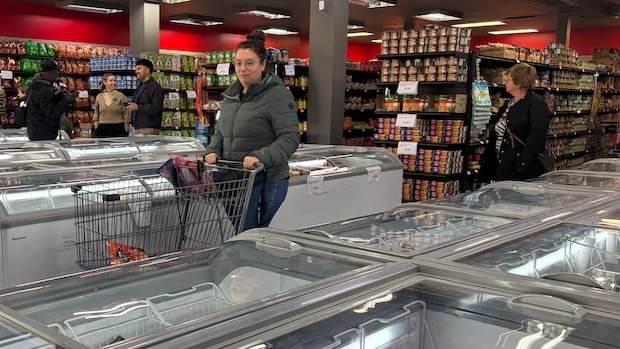

In the face of escalating living expenses, Ron Robinson is resolute in cutting costs, starting with his grocery expenditure. Opting for Liquidation Marie, a discount grocery chain in Montreal, he has managed to snag steaks for a mere six dollars each, a significant contrast to the average grocery store prices of $20 to $25 for the same quantity.
The trend of seeking out such bargains is on the rise nationwide, driven by the mounting food costs Canadians are contending with. Bianca Amor’s Liquidation Supercentre and The Grocery Outlet in southern Ontario have also witnessed growing popularity, expanding their presence to multiple locations.
Founded in 2012, Liquidation Marie, a Quebec-based grocery chain, has swiftly doubled its outlets in the past year alone. Co-owner Marie Eve Breton attributes the store’s remarkably low prices to purchasing surplus or mislabeled products from major retailers at discounted rates and passing on the savings to customers.
The store’s stock is constantly changing, featuring items like surplus or discontinued products, attracting an average of 30,000 customers weekly. The unpredictability hasn’t deterred shoppers; in fact, Liquidation Marie’s Facebook group boasting over 139,000 members reflects its increasing popularity.
Dr. Yu Ma, a marketing professor at McGill University, links the surge in discount grocery store patronage to the current economic climate, with grocery prices soaring by over 27% in the last five years. Families are increasingly exploring avenues to stretch their budgets due to inflation, with food expenses being a prime target.
By leveraging cheaper rental locations and catering to communities favoring such concepts, Liquidation Marie has thrived, as noted by Jordan LeBel from Concordia University. Sylvain Charlebois from Dalhousie University underscores how major retailers benefit from these stores by offloading damaged or surplus goods at discounted rates, preventing wastage.
Contrary to common belief, best-before dates primarily signify optimal quality rather than safety. Charlebois emphasizes that many products can be consumed past these dates, contributing to reduced food waste and alleviating pricing pressure on consumers.
As consumers increasingly embrace liquidation grocery stores, there is a growing rejection of the inefficiencies in Canada’s food supply chain. Ma points out that the shift towards these stores aligns with the broader movement towards reducing waste and inefficiencies in the food industry.
Discount food shopping is gaining traction across various income levels, with Ma noting its increasing popularity due to widespread food insecurity and rising prices. Charlebois predicts a surge in consumers sharing their discounted finds, reflecting a notable shift in consumer attitudes towards best-before dates and discounted products.