
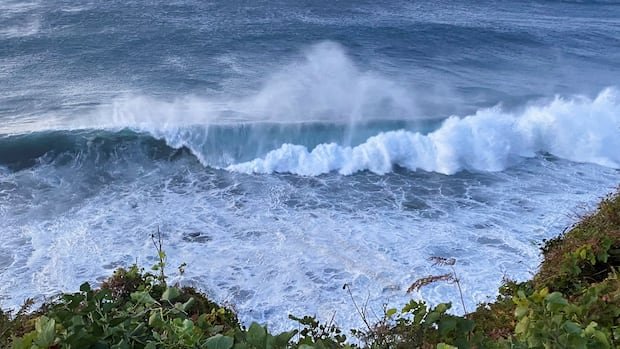

In the film “The Day After Tomorrow,” global weather patterns spiral out of control following the sudden shutdown of a vital Atlantic Ocean current. Catastrophic events unfold as tornadoes devastate Los Angeles, coastal New York is submerged under rising sea levels, and a deep freeze grips large parts of the Northern Hemisphere, causing instant fatalities.
While the movie falls under the genre of cli-fi (climate fiction), its premise is grounded in real scientific concepts that researchers are closely monitoring. The Atlantic Meridional Overturning Circulation (AMOC) is a key ocean current responsible for redistributing warm water from the southern Atlantic to northern regions, influencing Europe’s relatively mild climate compared to areas at similar latitudes in Canada.
Concerns have arisen that the AMOC could weaken or collapse due to the impacts of climate change. Rising global temperatures, driven by greenhouse gas emissions, are altering ocean temperatures and salinity levels, potentially disrupting the AMOC’s functioning. As sea surface temperatures increase and certain regions of the Atlantic become less saline, the process of water sinking and circulating may be compromised.
Scientists, including Wei Liu from the University of California, Riverside, have observed indications of a slowdown in the AMOC, raising questions about its long-term stability. Various studies have examined the potential consequences of an AMOC slowdown, with predictions ranging from a 30% decrease by the end of the century to a more drastic 50% slowdown by 2100.
Experts like Kent Moore from the University of Toronto emphasize the complexity of climate models and the uncertainties surrounding AMOC predictions. While the exact timeline and extent of a potential slowdown remain debated, researchers agree that the risk is real and could have profound global impacts.
The implications of an AMOC slowdown extend beyond Europe, affecting regions like Canada with projected sea level rise along the east coast. Geopolitical concerns arise as populations may be forced to relocate due to changing climate conditions and rising sea levels.
While scenarios like those depicted in “The Day After Tomorrow” are exaggerated, the potential consequences of an AMOC slowdown are significant. Shifts in weather patterns, agricultural challenges, and geopolitical disruptions could occur, emphasizing the need for proactive efforts to address climate change and its impacts on ocean circulation systems.