
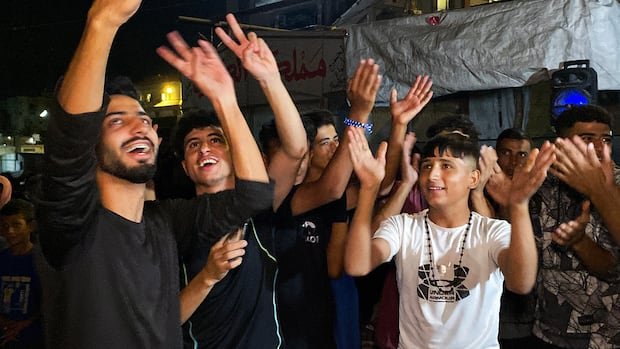

A sense of relief is spreading throughout the Middle East and beyond as news of a potential ceasefire in Gaza becomes apparent. Negotiators are emphasizing that the agreement, struck in the early hours in Sharm el-Sheikh, Egypt, is just the initial step towards a broader deal aimed at permanently halting the war. The first phase of the agreement is crucial, with the risk of either Israel or Hamas reneging on perceived commitments that could jeopardize the ceasefire.
Palestinians in Gaza, who have endured immense suffering, and Israeli families with loved ones held captive by Hamas, are experiencing a mix of relief and anxiety. Mahmoud Abdallah, a 27-year-old from Deir al-Balah, expressed his cautious optimism, while Israeli Yehuda Cohen, whose son Nimrod was captured by Hamas, described his family’s feelings as being in limbo.
The initial phase of the ceasefire agreement hinges on the release of all Israeli hostages within 72 hours of the ceasefire commencement, with the return of 28 bodies potentially taking longer. Additionally, 250 Palestinian prisoners in Israeli jails and 1,700 Gazans detained by Israel are set to be released, and humanitarian aid is expected to resume flowing into Gaza.
Key details of the agreement, based on U.S. President Donald Trump’s 20-point plan, are yet to be finalized. Uncertainties remain regarding the withdrawal of Israeli troops from Gaza, Hamas’s disarmament, and future governance plans for Gaza. The Trump plan envisions a “Board of Peace” led by Trump and former British Prime Minister Tony Blair, with the participation of an international security force, although the specifics are unclear.
The issue of Palestinian statehood, a crucial demand for Palestinians and Arab nations, is deferred in the plan. The resolution of the most contentious issues, including the right of Palestinian refugees to return, Israeli settlements, and Jerusalem’s status, will be pivotal for Gaza’s future.
Sustained international interest and potential pressure, particularly from the U.S. and key Middle Eastern countries, will play a crucial role in addressing these issues. While the agreement is seen as a positive step, critics highlight the need for further negotiations to address the remaining points. Mustafa Barghouti, a Palestinian politician, acknowledges the plan’s immediate benefits but stresses the importance of negotiating the other aspects of the agreement to ensure a lasting peace.
The history of failed peace processes underscores the urgency of reaching a comprehensive agreement to prevent talks from stalling indefinitely.