
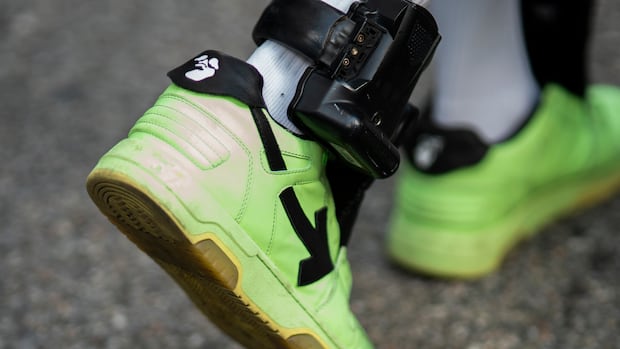

Since the introduction of ankle monitors in Manitoba in August 2024, recent statistics obtained by CBC News reveal that over half of individuals released with these devices have either been rearrested or violated their release conditions.
The justice minister’s office reports that 530 individuals were released via this program as of October 16, 2025. Out of this group, 243 were rearrested for either breaking their conditions or committing new offenses, while 53 removed their devices and absconded, 16 damaged the straps, and 12 allowed the batteries to die — collectively representing just over 60 percent of the total.
Charges were stayed for 11 individuals, 19 received sentences, and one was acquitted. Eight individuals had their monitoring conditions lifted, and one person died while under the device’s supervision.
As of October 16, there remained 166 individuals still wearing ankle monitors.
These figures were recently shared with CBC News by Justice Minister Matt Wiebe’s office, following the province’s earlier refusal to release them.
The information was disclosed after CBC obtained similar statistics during a recent bail hearing, where a Crown attorney cited the data to contest the release of a man facing domestic violence charges, even with an ankle monitor in place.
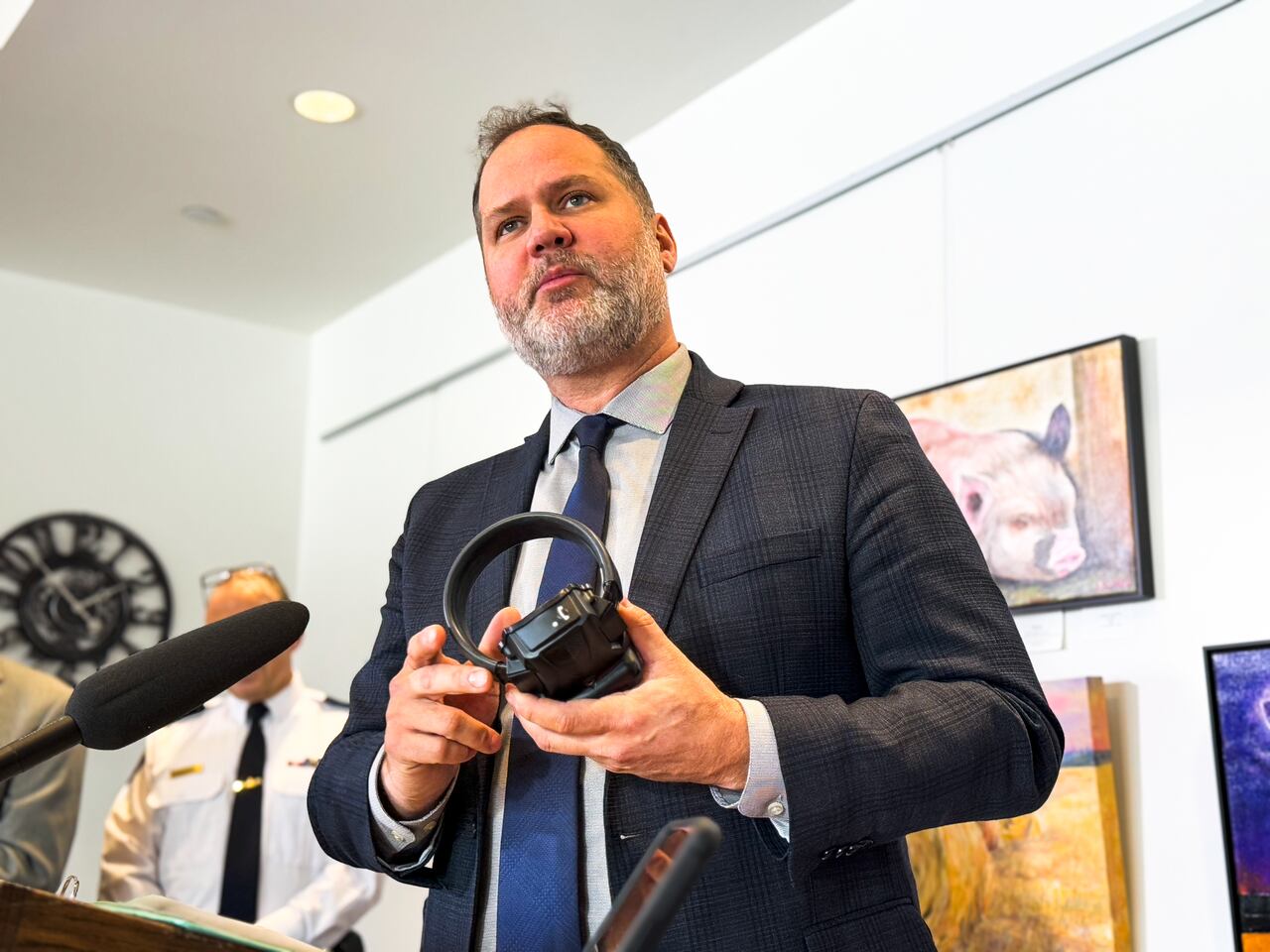
Justice Minister Matt Wiebe holds an ankle monitor at a Nov. 29, 2024, news conference. (Prabhjot Singh Lotey/CBC)
“The limitations of the program are emphasized by the statistics,” prosecutor Ben Wickstrom stated in court, resulting in the judge denying bail to the accused.
In another recent bail hearing involving a frequent alleged shoplifter, a Crown attorney referred to the program’s failure rate as “staggering,” noting that there was another case of a person accused of stealing from a pharmacy while wearing an ankle monitor.
“I’ve often heard it said that, ‘Well, we know where an individual is [if they’re wearing an ankle monitor].’ Well, no, we only know that if their battery is charged and they haven’t removed the device,” Crown attorney Colin Soul remarked during the hearing. “This isn’t an exaggerated claim from the Crown — we know this has happened.”
Bail was also denied for this accused individual.
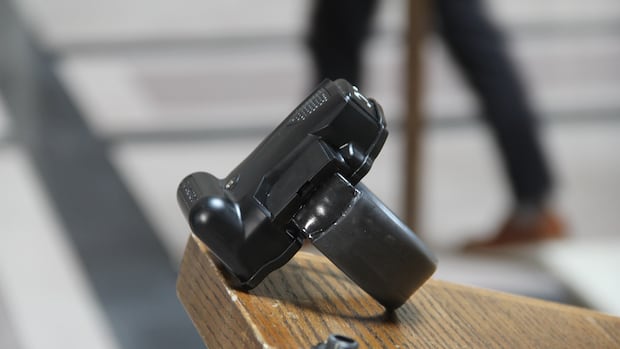
More than half the people released with an ankle monitor since those devices were introduced in Manitoba last August were rearrested or broke the rules of their release while wearing one, recent numbers obtained by CBC News show — which one expert says paints a “stark” picture of the program’s success.
The province initiated the ankle monitor program last year, when Justice Minister Wiebe asserted that these devices could help reduce reoffending and ensure compliance with release conditions.
The monitors feature 24/7 GPS tracking and facilitate real-time communication via voice, audio, and vibration alerts, which can emit loud alarms if individuals enter prohibited areas.
Success or failure?
Criminal justice professor Michael Weinrath stated that although electronic monitoring often generates interest due to the sense of security the ankle bracelet provides, the latest figures from Manitoba’s initiative suggest it has “failed miserably.”
“I don’t think you need a fellow like myself with a PhD to tell people that these are not good numbers,” said Weinrath, who is a faculty member at the University of Winnipeg. “They’re quite alarming.”
In a recent interview, Justice Minister Wiebe expressed his belief that the province is experiencing success with the program, partly because the GPS data from the devices allows authorities to quickly locate individuals who commit violations or new crimes.
“Previously … the search would begin” in such situations, he said. “And that places a significant burden on our law enforcement resources.”
However, Weinrath argues that counting individuals still under monitoring when assessing the failure rate, rather than limiting it to those who have completed the program, is “a way to inflate the success numbers.”
Excluding the 166 individuals still active in the program, its failure rate actually stands at 89 percent.
“I don’t know of any program that boasts an 11 percent success rate and that people are … genuinely pleased about,” Weinrath stated, adding that even according to the Justice Department’s calculations, “you’re still over 50 percent — those are not good numbers.”
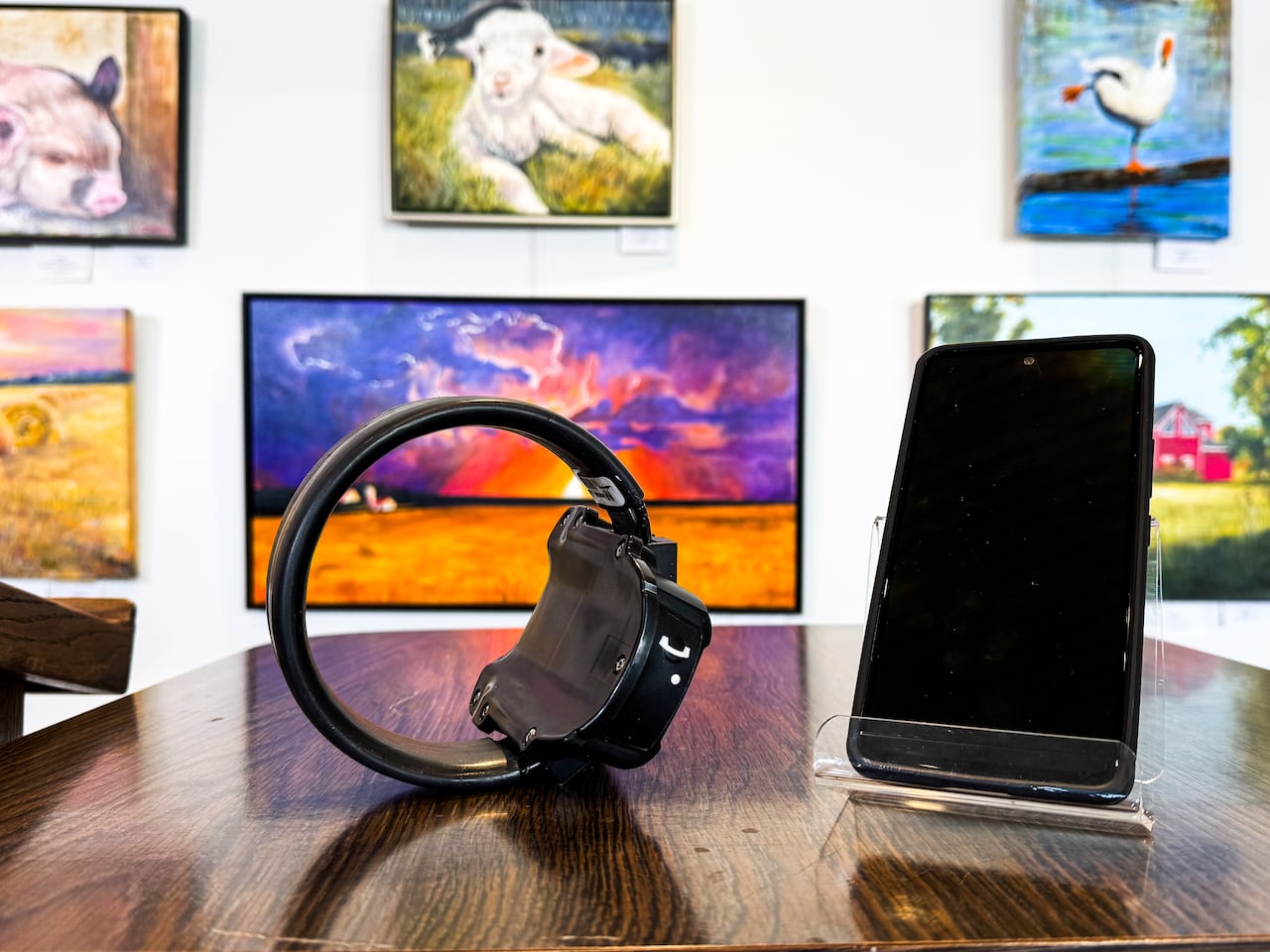
A November 2024 photo shows one of Manitoba’s ankle monitoring devices. The province rolled out the program in 2024 with a $2.9 million budget over two years, and later expanded it from 100 devices to up to 200, at an additional cost of $1.2 million for the year. (Prabhjot Singh Lotey/CBC)
Nonetheless, assessing the program’s success hinges on the metrics used, according to defense attorney Christopher Gamby.
An ankle monitor identifying a breach could be interpreted as a failure due to the violation, or as a success for catching the individual, he noted.
“If you believe that the goal of the program was to ensure that individuals … would never reoffend and would never breach their conditions, I suppose you could argue that the program was not fulfilling its intended purpose,” said Gamby, who also serves as the communications director for the Criminal Defence Lawyer Association of Manitoba.
“However, I don’t think that’s a realistic perspective. I think if individuals are being rearrested for failing to comply with the program, that might ultimately be seen as a success story.”
Gamby added that the program can be beneficial beyond merely monitoring breaches — for instance, in domestic violence scenarios, where accused individuals can be restricted from entering specified areas that include a complainant’s residence.
Over $4M allocated for monitors
Criminologist Weinrath expressed concern that while Manitoba’s justice department allocates millions of dollars toward ankle monitoring, claiming it enhances public safety, provincial prosecutors are questioning the program’s efficacy in court.
“When you encounter such discrepancies even within your own department, where frontline personnel are saying, ‘Well, let’s not use electronic monitoring because we know it’s ineffective’ … that seems to me an indication of a lack of success,” he commented.
Nonetheless, Justice Minister Wiebe indicated that he appreciates the caution exhibited by the Crown attorneys regarding the program, asserting that the province has provided “clear direction” to prosecutors to prioritize public safety and confidence in the justice system when making bail decisions.
The program was launched in 2024, managed by Commissionaires Manitoba, with an initial budget of $2.9 million over two years, later increasing from 100 devices to as many as 200, at an additional expense of $1.2 million for the year.
A similar program was terminated by the former Progressive Conservative government in 2017, following a review initiated by the NDP which revealed that the bracelets were frequently inaccurate or ineffective, according to former justice minister Heather Stefanson.
Prior to their ousting by the NDP in 2023, the Manitoba PCs had also announced intentions to reinstate electronic monitoring.
‘Where else could we allocate that funding?’
The reestablishment of ankle monitoring has occurred alongside calls for reform in the bail system nationwide, including within Manitoba, where Premier Wab Kinew recently criticized a judge’s decision to grant bail to a driver involved in a fatal accident.
During the recent bail hearing for the alleged shoplifter, where ankle monitoring statistics were discussed, defense attorney Carl O’Brien urged the judge to allow the law, rather than public sentiment, to dictate her decision on release.
“You should not be swayed by public sentiment from certain political figures who might feel compelled to comment on a judge’s bail decision — which has occurred recently,” O’Brien stated.
Criminologist Weinrath acknowledged that while electronic monitoring is appealing “because it’s technology and it’s modern,” and the province faces pressure to respond to demands for change in the justice system, he believes that funds would be more effectively allocated to addressing the root causes of crime.
- Manitoba youth struggling with addictions face limited resources, lengthy wait times, and geographical barriers: report
- Manitoba advocate raises alarms over youth addictions, urging the province for increased support
“Where else could we be allocating that funding? We could direct those resources towards addiction treatment, mental health support, or providing greater assistance to our bail population,” he suggested.
Regarding the future of ankle monitoring in Manitoba, Wiebe indicated that the province plans to keep evaluating the program.
“We will ensure that it’s functioning effectively. We know that more communities are requesting this program,” the justice minister affirmed. “Thus, we will explore opportunities to continue to expand.”