

Nvidia has introduced a powerful chip designed to integrate advanced artificial intelligence (AI) capabilities into laptops and desktop computers. This innovation will soon be featured in new personal computer models from renowned brands like Microsoft and Dell later this year.
Headquartered in Santa Clara, California, Nvidia has already achieved significant success by supplying high-end chips for data centers to meet the increasing demand for AI worldwide. The company is now strategically expanding its reach in AI systems and products.
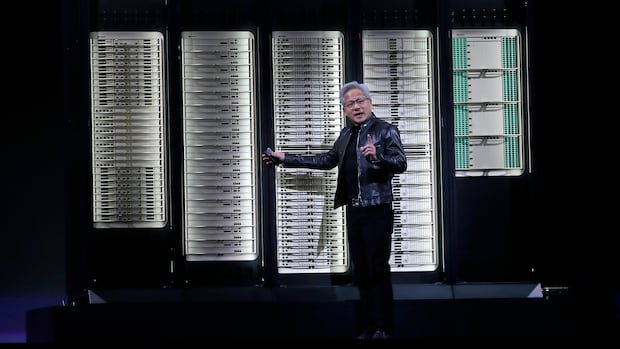
During the annual Nvidia GTC event in Taipei, Jensen Huang, Nvidia’s CEO and founder of Taiwanese-American descent, revealed the new chip. He emphasized a collaboration with Microsoft to redefine the personal computer experience. Huang unveiled the RTX Spark superchip, a combination of central processing unit (CPU) and graphics processing unit (GPU) capabilities. This superchip will power upcoming Windows laptop and desktop models, introducing what Nvidia terms “AI personal computers,” anticipated to launch this autumn.
Nvidia currently holds the title of the most valuable company globally, surpassing major players like Apple, Google’s parent company Alphabet, and Microsoft.
The company’s focus is on reinventing the PC for both creative endeavors and gaming. Huang envisions a future where AI agents, equipped with autonomous capabilities, will assist users in various tasks, from research to file management, by simply interacting with them.
Microsoft supported this initiative, stating that PCs featuring Nvidia’s RTX superchips will be capable of running highly advanced AI models and handling complex workloads, including the execution of AI agents locally.
Nvidia’s strategic move aligns with the growing demand for personal AI agents. Lian Jye Su, chief analyst at Omdia, emphasized that this development offers consumers more choices, indicating a positive trend in the market.
Industry analysts, including Neil Shah from Counterpoint Research, view Nvidia’s announcement as a transformative step that will reshape the future of PCs over the next decade. The introduction of new laptops and desktop computers aims to bring agentic AI applications into every household, essentially creating an “AI supercomputer” for each family.
During the event, Huang also highlighted the production of Vera CPUs for data centers, expected to drive significant growth in response to the AI boom. Early customers for these CPUs are anticipated to include Anthropic, OpenAI, and SpaceXAI. Additionally, Nvidia unveiled a humanoid robot reference design that could serve as a blueprint for future research, particularly within the higher education sector.