
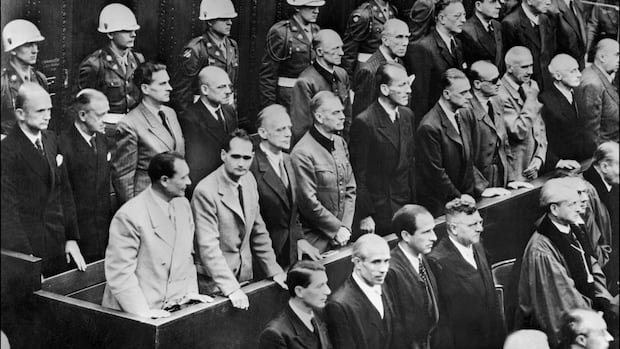

Eight decades after the commencement of the trials prosecuting the Nazi leaders for war crimes, the complete documentation of those proceedings is now accessible online at no cost. The Harvard Law School Library spent over 20 years digitizing more than 150,000 Nuremberg Trials documents, providing a searchable database with analyses, summaries, and images.
Paul Deschner, the technical lead of The Nuremberg Trials Project, emphasized the significance of having access to these documents, enabling a deeper understanding of the factors contributing to such tragic events throughout history, including the present day.
Launched on the 80th anniversary of the trials’ initiation in 1945, The Nuremberg Trials Project website aims to preserve the memory of the trials that sought accountability for the atrocities committed by Nazi Germany during World War II, notably the Holocaust, where six million Jewish individuals were murdered.
While the initial trial prosecuted 24 defendants, convicting 19 and sentencing 12 to death, subsequent trials led by the United States resulted in the conviction of nearly 200 more Nazis. These trials, once extensively followed and reported, are now seen as pivotal in establishing a framework for addressing mass atrocities globally.
Despite their historical significance, Deschner expressed concerns about the fading recollection of the trials and the preceding horrors among the younger generations. The project’s vast collection of Nuremberg Trial documents, the second-largest globally outside the U.S. National Archives, includes comprehensive transcripts, briefs, and exhibits from all 13 trials.
Started in 1998 due to the deteriorating physical condition of the original documents, the digitization process aimed not only to make the materials accessible but also well-organized and searchable with additional context. The meticulous work done by a dedicated team over the years ensured the preservation and accessibility of these crucial historical records.
Deschner emphasized the importance of recognizing historical patterns and learning from past atrocities to navigate the present effectively. The project serves as a valuable resource for understanding history and identifying potential patterns that may reoccur if not recognized and addressed promptly.