

A well-known fact about trees is their unique ability to store carbon dioxide, using it for growth. Younger trees, as they grow faster, absorb more carbon compared to mature trees. However, this carbon storage is not permanent, as when trees decay or burn in wildfires, the stored carbon is released back into the atmosphere.
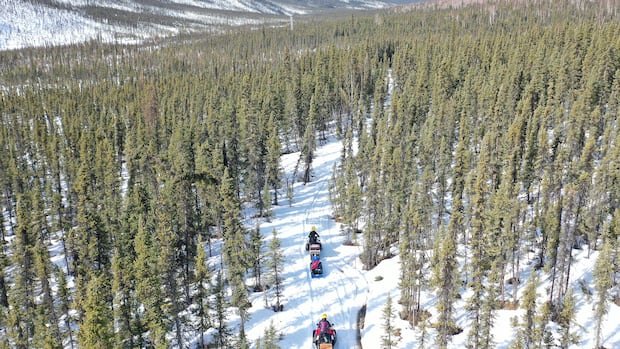
A group of researchers from the UK, Switzerland, and the Czech Republic have proposed a novel idea to sequester carbon by submerging mature trees from the vast boreal forest into the deep Arctic Ocean, effectively locking away the carbon for centuries. Their study, published in the online journal npj Climate Action, utilized computer modeling to assess the impact of removing specific stands of old, fire-prone trees in Canada, Alaska, and Russia. The plan involves floating these trees down six Arctic rivers, including the Yukon and Mackenzie, and sinking them in the Arctic Ocean.
Simultaneously, new fast-growing trees would be planted in place of the removed ones to enhance the absorption of carbon from the atmosphere. The study projected that by executing this process annually in three 10,000-square-kilometer areas, equivalent to just one percent of the boreal forest, an estimated one gigaton of carbon dioxide could be removed from the atmosphere each year.
Although this concept shows promise on paper, the actual implementation poses challenges. Considerations include the substantial energy and associated carbon emissions required for operations such as logging, transportation, and sinking the trees. Furthermore, the impact on marine ecosystems and the disruption to the intricate forest biodiversity, as highlighted by ecologist Suzanne Simard, must be evaluated. Additionally, the traditional lifestyles of Indigenous communities residing in these forests may be affected.
These large-scale geoengineering ideas aim to combat escalating carbon emissions, but they come with uncertainties and potential consequences for natural systems. Addressing the root cause of carbon emissions, primarily stemming from burning fossil fuels, remains the ultimate solution. Encouragingly, renewable energy technologies like solar, wind, and nuclear power offer emission-free alternatives and hold promise for a sustainable future. Embracing these cleaner technologies and transitioning away from fossil fuels is crucial to effectively combatting climate change and safeguarding the environment for future generations.