
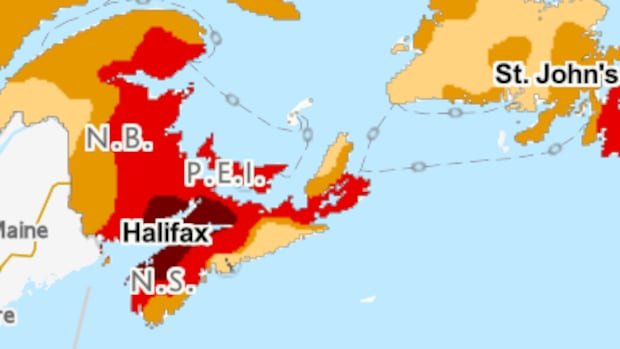

A professor at Acadia University is fielding inquiries regarding the drought situation in Nova Scotia. Ian Spooner shared about a homeowner in the Annapolis Valley facing a dry well for the first time, resorting to bottled water and expressing concerns about recovery. This homeowner’s plight mirrors that of many others in the region, with farmers dealing with diminished crops, municipalities enforcing water conservation measures, and residents grappling with dry wells.
Parts of Nova Scotia and New Brunswick are currently grappling with an exceptional drought, the most severe classification on the national scale. The Canadian Drought Monitor’s recent data as of September 30 reveals that southwest Nova Scotia and southeast New Brunswick are in the midst of a one-in-50-year drought event. Trevor Hadwen from Agriculture and Agri-Food Canada highlighted the seriousness of the situation, noting similar conditions last observed in the 1960s in Nova Scotia.
The Canadian Drought Monitor’s analysis indicates that several towns in Nova Scotia have encountered their driest three-month periods on record. Towns such as Amherst, Greenwood, and Truro have all recorded historically low rainfall levels, with Halifax experiencing its third-driest period. The province has received less than 40% of its normal precipitation, with significant rainfall deficits along the Bay of Fundy and the western province areas.
The impact is felt across various sectors, with the agricultural landscape in the Atlantic region classified as abnormally dry or worse. The stress on agricultural, ecological, and water supply systems is evident, leading to adverse effects on crops such as apples, corn, silage, beans, carrots, blueberries, pumpkins, and potatoes. Hadwen emphasized the potential long-term consequences of such prolonged drought conditions on plant roots and overall agricultural productivity.
Beyond affecting human food sources, the drought is also impacting livestock. Alicia King, president of the Nova Scotia Federation of Agriculture, highlighted the challenges faced by farmers in providing enough feed for their animals as grasslands dry up. The situation has forced some farmers to feed livestock earlier than planned, depleting winter reserves.
Despite the grim outlook, Professor Spooner urges caution and preparation rather than fear. He advises landowners to research their land’s hydrology before drilling new wells and emphasizes the importance of staying informed and proactive in addressing such situations.