

A generator hums in a grassy field at the Lake George wildfire operations site in Nova Scotia, where a crew member lays out numerous hoses to dry under the sun. These hoses were recently removed from homes and infrastructure, where they supplied water to hundreds of sprinklers that sprayed water to safeguard properties from encroaching flames and falling embers.
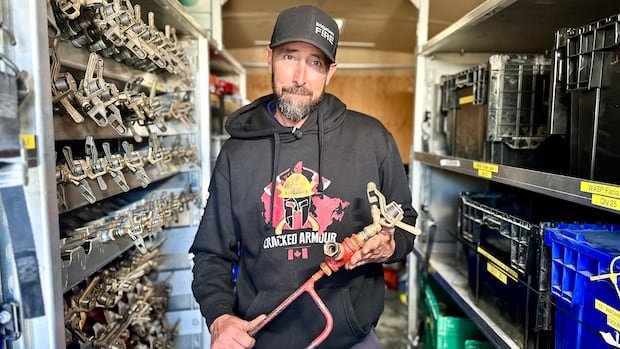
Following the successful containment of the Kings County wildfire, the equipment is now being packed into trailers for future use. This wildfire season marked the largest protective operation in Nova Scotia’s history for structures. The effectiveness of these measures has prompted the Department of Emergency Management to procure additional structure protection units containing essential equipment like sprinklers, pumps, and hoses.
Dave Rockwood, the province’s fire and ground search and rescue co-ordinator, highlighted the pivotal role of sprinklers in safeguarding numerous homes and infrastructure during the Lake George and Long Lake wildfires. The sprinklers were instrumental in wetting surfaces to prevent ignition from embers and cooling the environment to impede fire spread.
At Lake George, around 600 sprinklers of various types were deployed, requiring five days for setup and continuous labor over weeks. Nova Scotia currently possesses one structure protection unit and intends to acquire more units at $245,000 each. The province collaborates with local fire departments that have their own units, such as Halifax Regional Fire and Emergency and the Brooklyn Volunteer Fire Department.
During the Long Lake fire in Annapolis County, 88 homes were equipped with sprinklers, saving 85 of them. Unfortunately, three homes could not be saved due to topographical challenges and varying fuel types affecting firefighting outcomes.
Jason Burton, whose house was protected by sprinklers and survived the blaze, expressed gratitude for the life-saving efforts. The strategic deployment of sprinklers, including around the community, created a defensive perimeter of water during the Lake George wildfire, according to Rockwood.
Maintaining the sprinkler system involves a massive logistical operation. Crews either pump water from nearby sources to feed hoses directly or transport water using large portable tanks. Rockwood mentioned the significant water volume moved during the Long Lake fire, necessitating the use of portable tanks and tanker trucks to ensure a reliable water supply on site.
While sprinklers were instrumental in the Lake George and Long Lake wildfires, they were not utilized during the faster-moving Halifax-area and Shelburne County wildfires in May 2023. The province plans to procure new structure protection units through its regular procurement process to enhance firefighting capabilities.