

An age-old game of cat and mouse has been unfolding discreetly for nearly a year in various regions of the North Atlantic, North Sea, and Baltic Sea involving NATO allies and a Russian surveillance vessel. This ongoing situation has raised concerns among European political and military leaders.
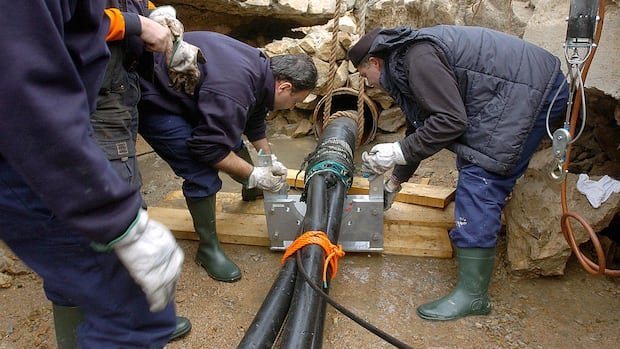
Simultaneously, there have been multiple incidents of damage to undersea cables over the past two years, primarily in the Baltic region. An incident in July off Orkney and Banff in the U.K. also raised questions about whether these were intentional attacks or mere accidents, prompting investigations.
The consensus is growing that more measures need to be taken to safeguard the undersea infrastructure, which is vital for the global economy.
To address these concerns, Germany’s armament secretary and navy chief recently visited Ottawa to meet with Canadian navy and defense officials. They discussed plans to implement maritime drones, both on the surface and underwater, as a means of enhancing security.
Remotely operated underwater vehicles are considered crucial for protecting the undersea infrastructure, but the responsibility for their deployment and operation is currently under active debate.
Russia’s research vessel, the Yantar, suspected by Western intelligence of mapping undersea cables and infrastructure, has been observed lingering near these critical assets, especially in November and December 2024, drawing the attention of Finnish and Swedish authorities.
Peter Sandwell, Sweden’s state secretary of defense, highlighted the importance of securing critical underwater infrastructure, especially in the Baltic Sea, where his country, as NATO’s newest member, has been monitoring potential threats.
In response to the escalating incidents, NATO initiated the Baltic Sentry mission in January to bolster its military presence and monitor threats to underwater infrastructure. The mission was reinforced last month with the deployment of the U.S. warship USS Bulkeley, a guided missile destroyer.
The war in Ukraine has spurred advancements in drone technology, as noted by European Commissioner for Defence and Space, Andrius Kubilius. He emphasized the need for Western countries to catch up with Ukraine and Russia in utilizing remote technology.
The Royal Canadian Navy is procuring autonomous subsurface drones designed to detect and neutralize underwater mines, showcasing Canada’s commitment to enhancing maritime security.
Several Canadian companies are pioneering marine drone technology, with Seamor Marine Ltd. developing drones for aquaculture, infrastructure inspection, and underwater exploration.
Germany aims to advance its drone capabilities but stresses the importance of collaboration between the defense sector and private companies in safeguarding undersea cables and critical infrastructure. Plötner emphasized the shared responsibility between governments and industry players in ensuring the security of these assets.
Recent reports from the U.K. Parliament’s joint committee on national security strategy highlighted industry skepticism about coordinated attacks on undersea cables. While acknowledging the sector’s overall resilience, the report urged preparedness for low-probability, high-risk scenarios to uphold national security.
This renewed focus on safeguarding undersea cables and infrastructure underscores the critical role of maritime security in an increasingly interconnected world.