
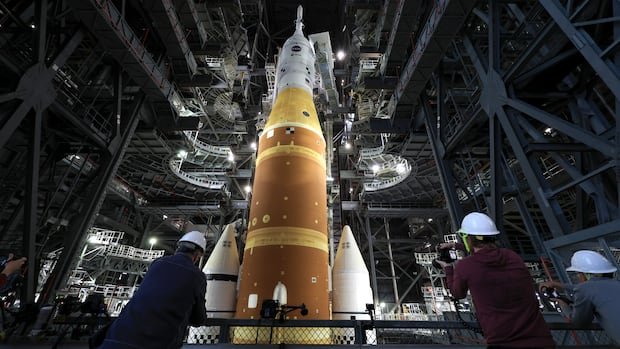

NASA’s Artemis II mission, originally scheduled for launch on Feb. 8, has been postponed by at least a month due to a hydrogen leak detected during tank fuelling. The previous Artemis mission also faced delays related to fuel leaks.
The challenge of handling liquid hydrogen and oxygen – rocket fuel components with extremely low boiling points of -253 C and -183 C respectively – is highlighted by their propensity to leak due to their frigid nature. These cryogenic liquids require specialized equipment to prevent freezing or cracking from the vast temperature difference with the surrounding environment during launch in Florida.
To contain the ultra-cold fuels, the core stage of the Space Launch System (SLS) rocket is coated in insulating foam, protecting the fuel from heat exposure. Despite these efforts, cryogenic fuel pressure buildup generates visible vapor escapes from fully fueled rockets.
The leak issues are exacerbated by hydrogen’s ability to escape through small openings, necessitating meticulous sealing of the intricate fuel pipelines and joints across the SLS rocket system. The recent leak during a wet dress rehearsal stemmed from a connector at the launch tower, a recurring problem that caused significant delays during the Artemis I mission.
Efforts are underway to address the leak at the launch pad, potentially avoiding lengthy repairs and launch delays. However, a new wet dress rehearsal is planned before the revised launch date, now set for no earlier than March 6.
While hydrogen leaks have been persistent in NASA’s space program, other entities like SpaceX and the Russian space program have shifted to more manageable fuels like kerosene. The SLS rocket’s reliance on liquid hydrogen and oxygen stems from its efficiency in providing high thrust for heavy lift missions, despite concerns over cost and sustainability.
Critics argue that the SLS rocket’s non-reusability and high operational costs are unsustainable compared to modern reusable rockets used by private companies. The future of the SLS rocket hinges on resolving hydrogen leak issues while addressing cost concerns to support the workforce involved in its construction.