
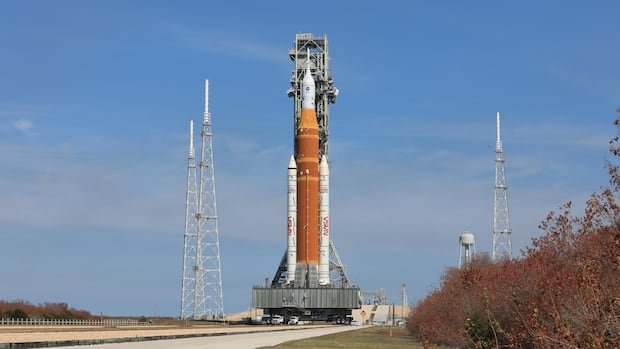

NASA has restructured its Artemis program, shifting focus from a 2028 moon landing to conducting test flights in low-Earth orbit next year. This change follows the recent postponement of the Artemis II rocket launch due to technical issues, delaying the planned moon flyby until early April. NASA Administrator Jared Isaacman announced that Artemis III will involve a docking test in low-Earth orbit between the Orion astronaut capsule and the lunar landers from SpaceX and Blue Origin.
Instead of proceeding directly to a lunar landing, the new approach is to rendezvous with one or both lunar landers in low-Earth orbit. The agency still aims for a lunar landing in 2028 with Artemis IV, with plans to increase mission frequency to potentially launch every year or every 10 months.
Isaacman emphasized the importance of rebuilding NASA’s workforce to facilitate quicker turnaround for launches. Additionally, testing various mission components like lunar landing suits and conducting extravehicular activities are deemed crucial. These adjustments align more closely with NASA’s historical space programs, such as the Apollo missions of the 1960s and 1970s.
The revised strategy is reminiscent of NASA’s incremental approach during the Apollo era, where thorough testing and gradual progress were prioritized before landing astronauts on the moon. The upcoming Artemis II mission, set to include Canadian Space Agency astronaut Jeremy Hansen and NASA astronauts Reid Wiseman, Christina Koch, and Victor Glover, remains unchanged in its objectives.