
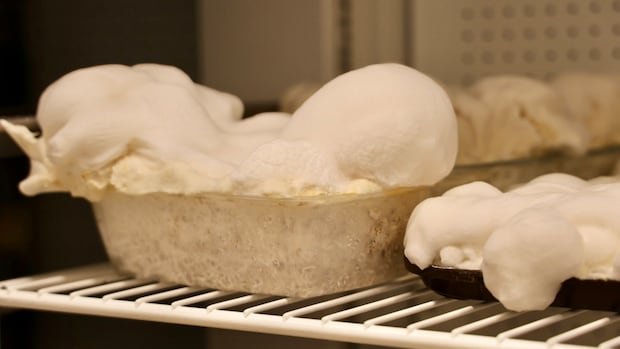

Deep in a dimly lit growth chamber at Acadia University’s research lab, a unique white substance emerges from an industrial tray, resembling meringue or snow. This peculiar organism is mycelium, the root structure of mushrooms. Collaborating with an entrepreneur, researchers at Acadia are refining a process to utilize mycelium for producing a high-protein powder for the commercial food sector.
The brainchild behind this project is Katie McNeill, an individual with an agricultural background who recognized the untapped potential of certain agricultural food products in the Valley that were being discarded. She stumbled upon literature suggesting mycelium could be ideal for cultivating high-protein mushrooms, leading her to partner with biologist Allison Walker at Acadia to embark on this venture.
Their experimentation involved selecting specific food waste from a Valley facility, nurturing mycelium on it, and optimizing growth conditions by varying mushroom species, temperature, and humidity. Through a methodical process, they prepared a mycelium liquid broth mixed with food waste, allowing the mycelium to flourish before transferring it to trays for further growth.
The mycelium produced by Walker and McNeill boasts an impressive 40% protein content, surpassing the protein levels found in traditional mushrooms. Unlike some companies that mass-produce mycelium in large vats, resulting in a sludge-like product, McNeill aims to keep her end product as minimally processed as possible through her company, Mycaro.
Furthermore, Mycaro’s sustainable production approach, utilizing agricultural food waste and requiring less energy compared to other protein sources, sets it apart in the market. By leveraging indoor vertical farming techniques that eliminate the need for excessive lighting, the operation aims to be environmentally friendly and energy-efficient.
McNeill emphasizes the rising consumer demand for proteins, particularly among women seeking products that not only offer high protein content but also suit their dietary preferences. The neutral taste of the mycelium product developed by McNeill and Walker fills a gap in the market for consumers dissatisfied with existing protein options like whey, soy, or pea protein.
In the coming months, the focus will be on enhancing production yield and conducting consumer trials at Acadia’s food lab. McNeill envisions establishing a small commercial production facility in the Valley by the end of 2026, with plans for further expansion. Despite facing challenges due to the finicky nature of mycelium growth, McNeill remains optimistic about the future of Mycaro and its innovative high-protein product.