


An experienced Mexican legislator predicts the end of trilateral trade pacts involving Mexico, Canada, and the U.S.
Germán Martínez Cázares, a former member of Mexico’s ruling National Regeneration Movement (Morena) party, believes that the current agreement is not sustainable due to the nationalist stances adopted by the U.S. and Mexican governments.
During a session at Mexico’s lower house, known as the Chamber of Deputies, Martínez Cázares stated to CBC News that the future holds bilateral agreements between Mexico and Canada, and between Mexico and the United States, signaling a shift into uncertain territory.
Despite the Mexican government’s public commitment to the trilateral trade deal, there is a growing sentiment in the country that the U.S. is considering a change in its approach.
Shortly after Martínez Cázares’ remarks, U.S. President Donald Trump, alongside Prime Minister Mark Carney, hinted at the possibility of pursuing different trade deals with individual countries, casting doubt on the current trilateral agreement.
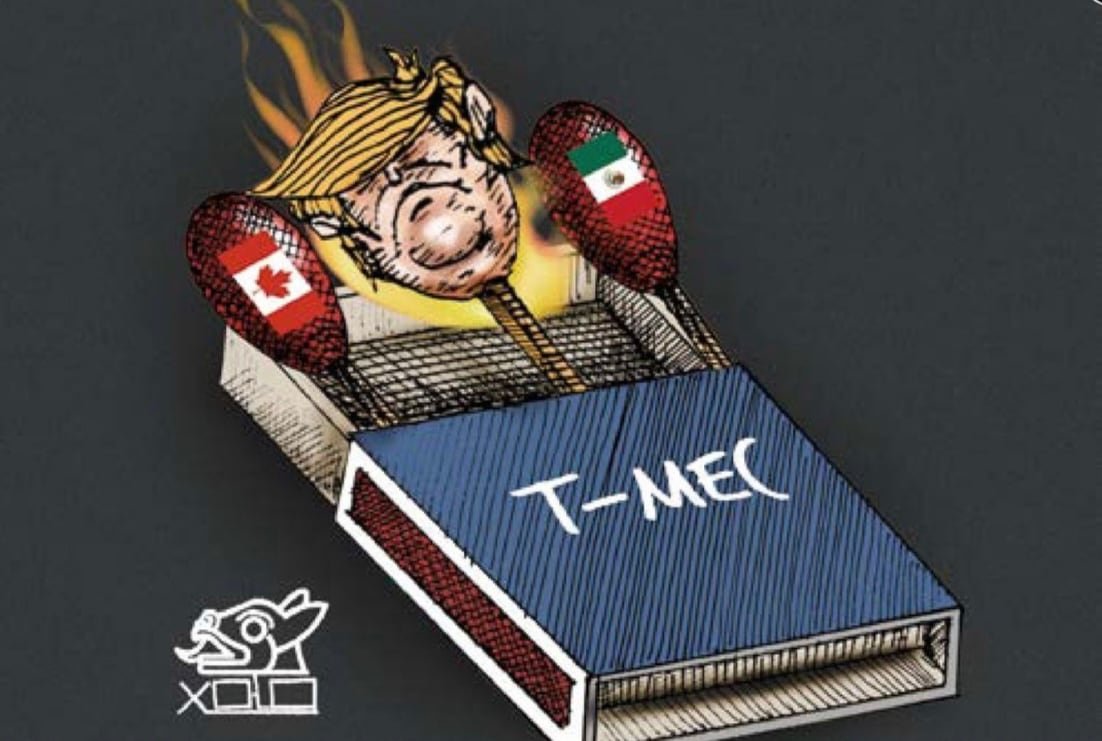
Trump’s statements made headlines in Mexican newspapers, suggesting a potential threat to the existing trade agreement known as the Canada-U.S.-Mexico Agreement (CUSMA) in Canada and the Tratado entre México, Estados Unidos y Canadá (T-MEC) in Mexico.
The U.S. Trade Representative’s recent comments questioning the utility of the deal added to the speculation. Meanwhile, Mexico’s President Claudia Sheinbaum emphasized the possibility of engaging in bilateral discussions within the framework of the trilateral trade agreement.
NAFTA’s Impact on Trade
Mexico’s Secretary of Foreign Affairs, Juan Ramón de la Fuente Ramírez, reaffirmed the government’s commitment to seeing CUSMA through the 2026 review process, highlighting the importance of the trade relationship with Canada.
Canada and Mexico have significantly increased their trade volume since the signing of the North American Free Trade Agreement (NAFTA) in 1994, with Mexico becoming a crucial player in the automotive industry’s supply chain. Canadian investments in Mexico have also grown, particularly in sectors like mining and energy.
Amidst uncertainties surrounding the trilateral trade deal, Ottawa businessman Etienne Poisson expressed optimism about potential future free trade agreements between Canada and Mexico, citing Mexico’s attractiveness for business expansion compared to the U.S.
Poisson highlighted the importance of CUSMA compliance for his firm’s operations and expressed confidence in the prospect of continued trade relations between Canada and Mexico.

Debate Over Customs Legislation
Martínez Cázares, representing a district reliant on agricultural exports to the U.S. and Canada, criticized the Sheinbaum government’s customs reform bill, suggesting it could hinder free trade efforts.
The proposed customs law, aimed at modernizing controls and combating corruption, has sparked controversy. Critics argue that the bill could disrupt existing import rules and increase costs for importers, potentially impacting trade relations.
While some lawmakers defend the bill as a necessary step to combat corruption, concerns remain about its implications for trade and compliance with international agreements like CUSMA.