
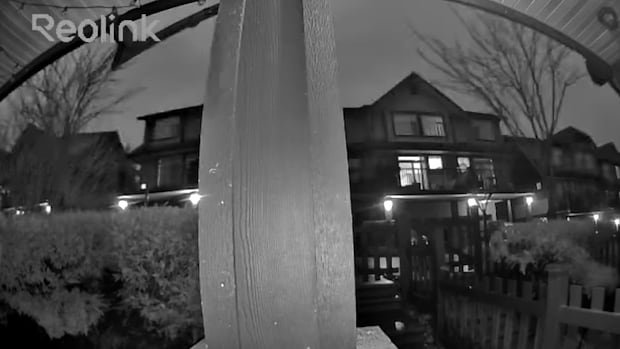

A bright flash accompanied by a loud boom witnessed by residents in British Columbia on Tuesday night was caused by a meteor passing through the Earth’s atmosphere, experts confirm. Robert Lunsford from the American Meteor Society described the event as a “fireball,” which refers to a meteor larger and brighter than usual. While most meteors are typically small, about the size of a pea, their high speed can make them visible in the night sky.
According to Lunsford, even a meteor the size of a softball can produce a flash as bright as a full moon, qualifying it as a fireball. The rapid duration of the flash ruled out the possibility of human-made space debris, indicating that the event was a natural fireball composed of stone, metal, or a combination of both.
Meteorologist and science reporter for CBC News, Johanna Wagstaffe, suggested that the phenomenon was likely a meteor passing through the atmosphere. She pointed out that local seismographs registered a spike around 9:10 p.m. PT, and the sonic boom observed is a typical sign of a meteor entering the atmosphere. While meteors are not frequently seen in western North America, Wagstaffe emphasized the significance of witnessing such celestial events.
The sonic boom occurs when an object moves rapidly through the upper atmosphere, compressing and heating the air in front of it. Although the object likely burned up during its descent, further analysis by astronomers and research groups will provide more insights into the event.
NASA confirmed the reports of the meteor over the Pacific Northwest shortly after 9 p.m. on Tuesday, based on data from the American Meteor Society and a National Oceanic and Atmospheric Administration satellite. The meteor was spotted approximately 98 kilometers above Coquitlam, B.C., traveling at a speed of about 33 kilometers per second before disintegrating at an altitude of 65 kilometers above Greenmantle Mountain in Garibaldi Provincial Park.
The fireball was visible over a wide area, with observers reporting sightings from Comox to Merritt and even as far south as Seattle, Washington. Initial assessments suggest that the fireball resulted from the natural entry of a rocky asteroid fragment, possibly up to 100 centimeters in size, into the Earth’s atmosphere. The glowing atmosphere and audible boom are attributed to the rocky fragment’s high speed exceeding that of sound, similar to a supersonic jet plane’s boom.
Given that the fireball descended into a heavily forested and mountainous area north of Coquitlam, any surviving fragments would be challenging to locate.