
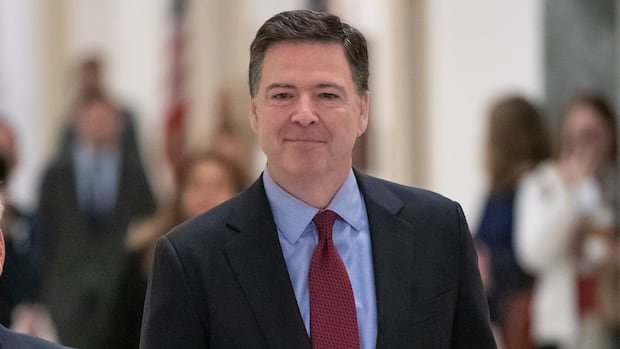

A United States judge determined on Monday that there are indications of improper conduct in the way a federal prosecutor closely linked to President Donald Trump obtained criminal charges against James Comey. Consequently, the judge ordered the release of grand jury materials to Comey’s defense team.
The U.S. Magistrate Judge William Fitzpatrick, based in Alexandria, Virginia, concluded that Lindsey Halligan, the U.S. attorney appointed by Trump overseeing the case, may have committed significant legal errors in presenting evidence and guiding the grand jurors evaluating whether to prosecute Comey. These errors could have compromised the case, according to Fitzpatrick’s ruling.
James Comey, a vocal critic of President Trump, was charged in September with allegedly providing false statements and obstructing a congressional investigation. He pleaded not guilty to the charges.
Another judge had previously questioned the legality of Halligan’s appointment, and concerns about political motivations in Justice Department investigations have been raised in other courts. Halligan, who had a background in real estate law and had represented Trump in civil cases, had no prior experience as a prosecutor before her appointment by Trump.
The Justice Department declined to comment on the judge’s decision, and prosecutors moved swiftly to halt the release of grand jury materials, arguing that the judge may have misunderstood certain facts. The government requested a pause to allow time for objections to be filed.
Comey has been pushing for the dismissal of the charges, claiming they stem from Trump’s personal animosity towards him due to his criticism of the president and his involvement in an investigation into connections between Trump’s 2016 campaign and Russia. Trump has been known to threaten to jail his opponents since his initial presidential campaign in 2015.
The indictments of Comey and other Trump critics, such as John Bolton and New York State Attorney General Letitia James, have raised concerns about the Justice Department’s traditionally impartial approach to criminal investigations. Prosecutors allege that Comey misled a Senate committee in 2020 about authorizing FBI personnel to be anonymous sources in news reports regarding investigations into Trump and Hillary Clinton.
Fitzpatrick’s ruling called for the disclosure of grand jury materials to Comey’s defense team for potential use in a future legal motion to dismiss the charges. While acknowledging that such disclosure is rare, Fitzpatrick deemed it necessary in this case due to concerns about government misconduct potentially impacting the grand jury proceedings.
The judge’s ruling highlighted various investigative mistakes in the case, including the review of old evidence without a new warrant and allowing an FBI agent to testify before the grand jury despite potential exposure to privileged information. Additionally, Halligan’s statements to the grand jurors were deemed detrimental to Comey’s legal rights.